
Get SaaS Comparison Pages Cited by ChatGPT & Perplexity
As of 2026, structural optimization is 3.9x more influential for AI citations than domain authority. Shift from backlink reliance to machine-readable architecture to capture high-intent pipeline.
Automate Your AI Citations

The Shift from Authority to Architecture
B2B SaaS comparison pages become citable when they prioritize technical architecture and machine-readable structures over traditional link building. In the era of Generative Engine Optimization (GEO), the fundamental mechanics of visibility have shifted.
Page-level structure now correlates significantly more strongly with citation rates (+0.71) than domain authority (+0.18). This paradigm shift democratizes visibility, allowing newer or lower-authority SaaS domains to reach the top quartile of AI citations simply by prioritizing technical formatting.
Enterprise platform Vercel saw ChatGPT-driven referrals grow from 1% to 10% of its total new user signups within a six-month period.
Technical Foundations for AI Extraction
To become a primary source, a B2B SaaS comparison page must proactively hand its data to AI agents. Two specific technical foundations provide the highest leverage for the lowest implementation effort.
The llms.txt File
Acting as a specialized map for AI crawlers, implementing a valid llms.txt file at the root directory increases overall citation rates by 24% across all major AI engines.
SoftwareApplication Schema
Valid SoftwareApplication schema explicitly defines the software's name, category, and capabilities to the LLM. This provides an 18% lift in cross-engine citations, and a massive 33% increase specifically for Google's Gemini.
The "Table-Serialization" Standard
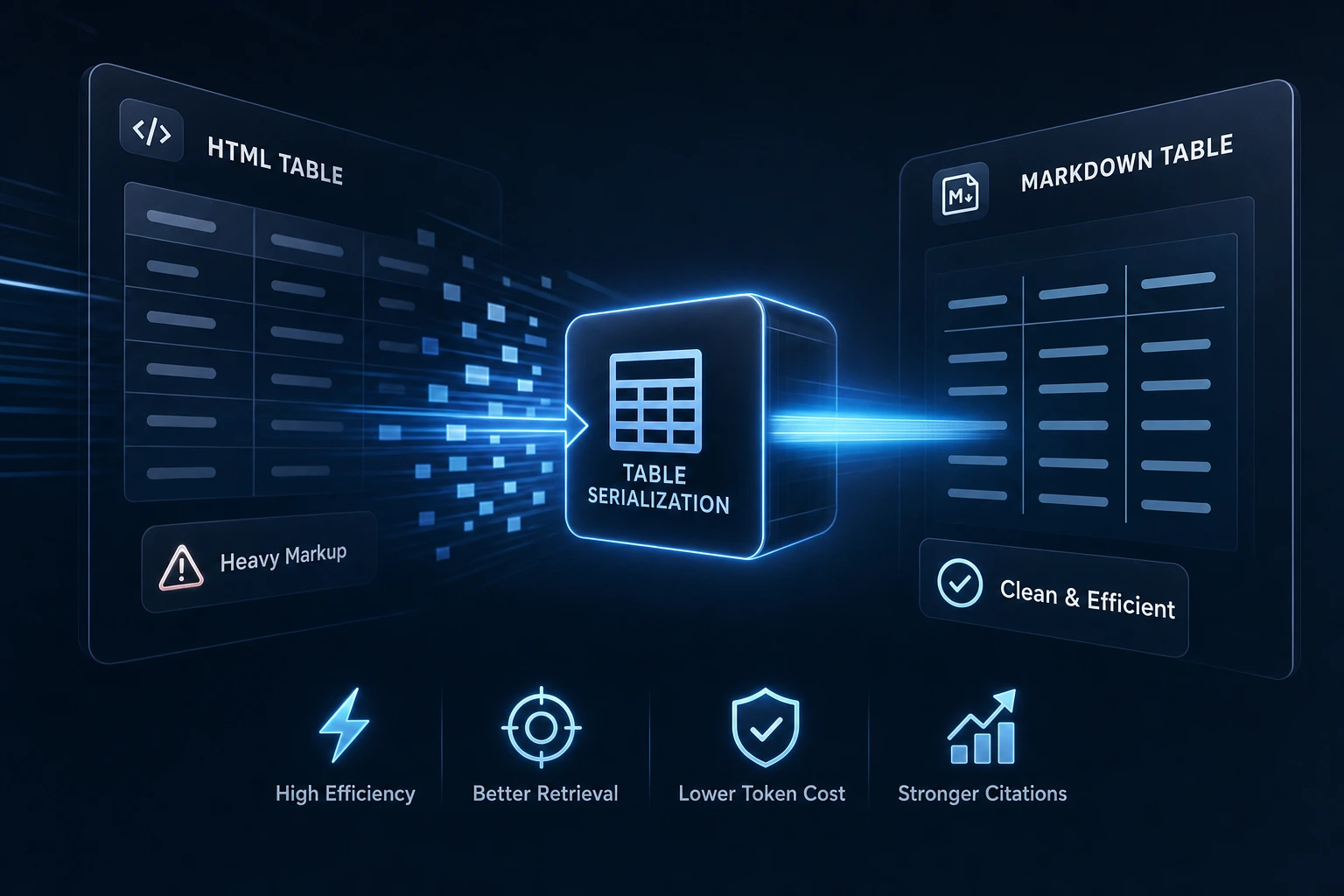
Comparison tables are no longer just visual aids for human readers; they are the primary data extraction sources for generative engines. However, standard HTML tables are incredibly inefficient for LLMs, introducing excess structural code that consumes valuable token windows.
Dense Markdown tables, known as "Table-Serialization," drastically outperform narrative prose and HTML for AI extraction. This format reduces semantic ambiguity and ensures that highly dense feature data fits cleanly within a single retrieval chunk. In fact, SaaS company CloudScale increased its citation rate in AI Overviews by 210% within three weeks simply by refactoring unstructured comparison data into dense Markdown tables.
Impact of Table-Serialization vs. HTML
| Optimization Factor | HTML Comparison Tables | Markdown "Table-Serialization" |
|---|---|---|
| Token Efficiency | Low (Heavy DOM markup) | High (Minimal syntax) |
| LLM Training Bias | Moderate | Very High (GitHub/Code bias) |
| Retrieval Chunking | Often fragmented | Maintained as a single entity |
| Citation Impact | Baseline | Up to 210% visibility lift |
Content Strategy for "Cite-Bait" Pages
To engineer pages that AI engines prefer, marketers must adhere to specific formatting thresholds and structural requirements.
Interrogative Headings
Phrasing H2 headings as direct questions (e.g., "How does Product X work?") lifts citation rates by 22%. It aligns perfectly with user query syntax.
Dedicated Sections
Including explicitly labeled comparison sections provides a 38% increase in overall visibility and a 51% increase specifically within ChatGPT.
The 2,500-Word Threshold
AI engines preferentially cite comprehensive pages that are at least 2,500 words long and include a specific named methodology or three named-source citations.
ChatGPT vs. Perplexity
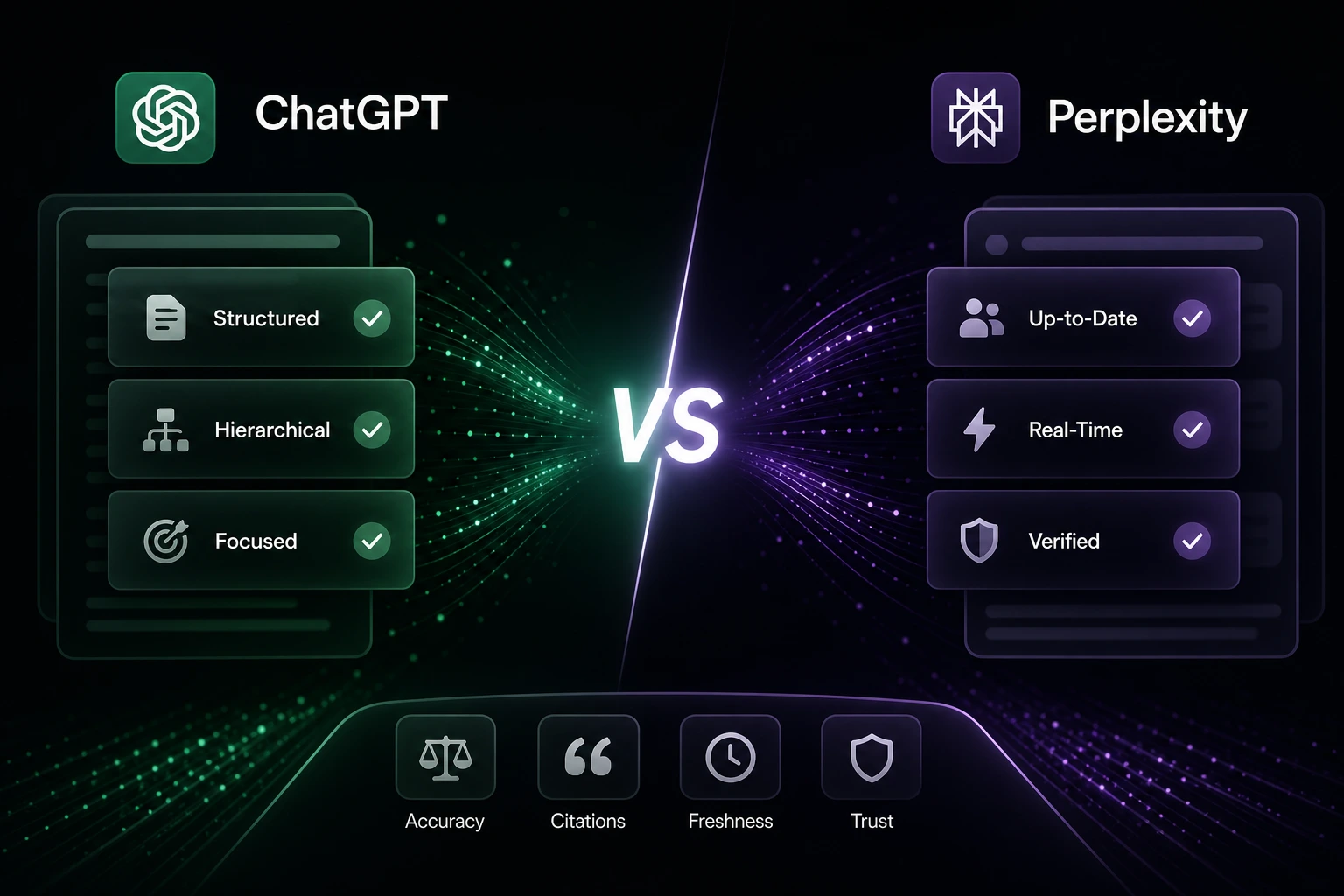
While there is overlap, different engines have unique citation triggers that B2B SaaS marketers should target.
ChatGPT: Structure & Length
ChatGPT relies heavily on Retrieval-Augmented Generation (RAG) chunking. It prefers hierarchical sections that are precisely between 120 and 180 words long, prioritizing pages that directly answer specific comparative queries early in the section.
Perplexity: Validation & Freshness
Perplexity values consensus and immediacy. 46.7% of Perplexity's top citations are actively driven by Reddit community validation. Furthermore, monthly updates to comparison pages correlate with a 30% higher citation rate.
Track Competitor Mentions →Automate Your GEO Comparison Strategy
Anymorph functions as an autonomous website operating system that automatically structures and formats B2B content for generative engine visibility. Stop manually auditing your site architecture for LLM compliance and start measuring your AI visibility analytics.