
Competitor Dominating ChatGPT Results? How to Diagnose the Gap
Generative AI platforms now dictate digital visibility, with AI-referred visitors converting at 23x the rate of organic search traffic. Learn how to reclaim your share of voice.
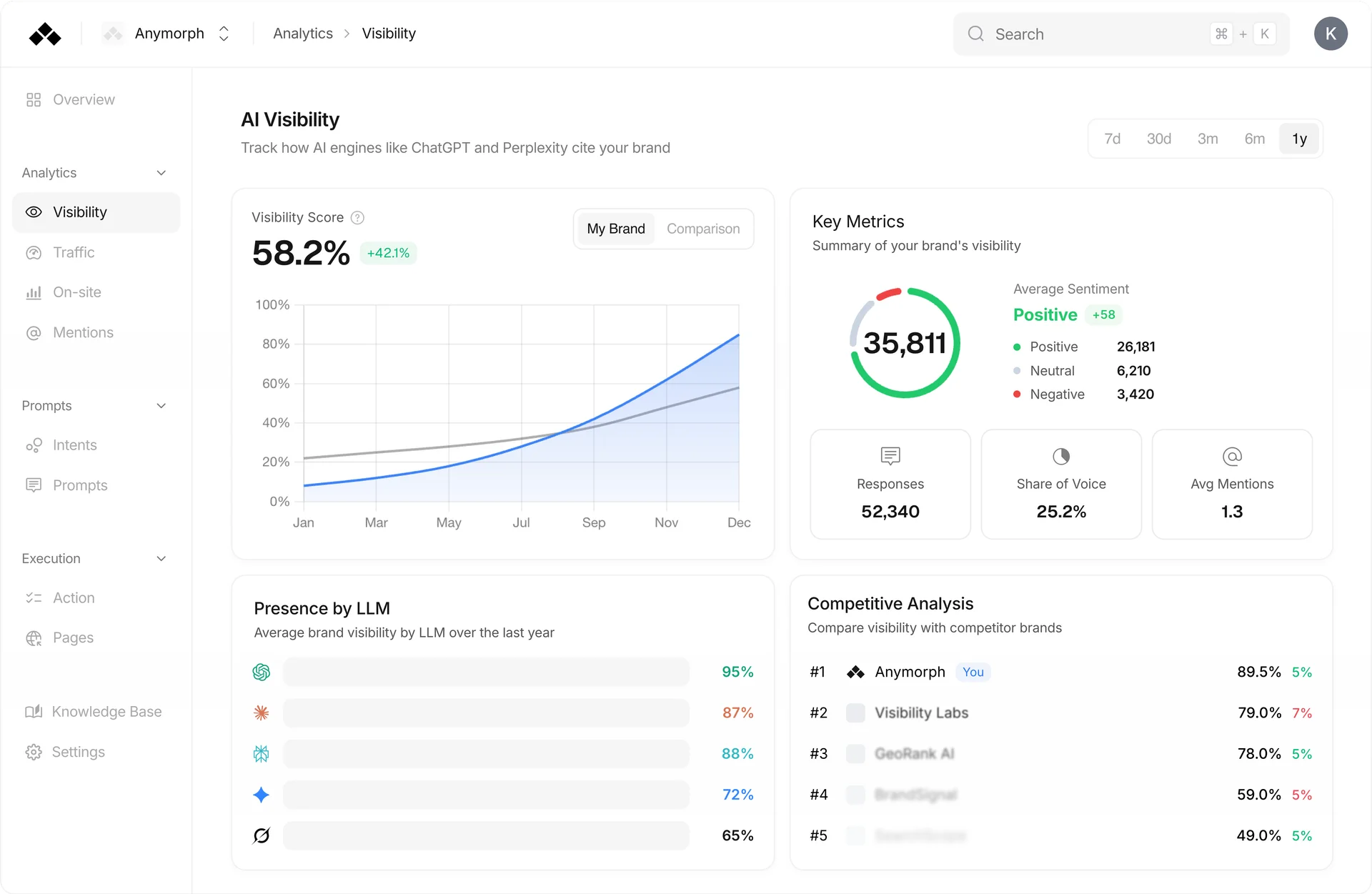
What is an AI visibility gap in generative search?
An AI visibility gap occurs when generative search engines consistently cite a competitor's brand, product, or content instead of yours for key industry queries.
As buyers shift their research habits to platforms like ChatGPT, Claude, and Perplexity, owning Generative Engine Optimization (GEO) has become business-critical. Traditional search engine optimization (SEO) focused on getting a blue link to rank on a results page. Generative search, however, synthesizes direct answers using the data it considers most complete, accessible, and credible.
"You can't optimize for AI search if the engines don't even know you exist. Closing the visibility gap starts with technical fundamentals."
— Sarah Jenkins, Director of Search Strategy
Why do AI search visibility gaps matter for revenue?
AI search visibility drives disproportionate revenue growth because users interacting with AI summaries have higher intent and deeper trust in the recommended solutions.
The financial stakes of appearing in ChatGPT and Perplexity are drastically higher than traditional organic search. As of 2026, visitors referred by AI platforms convert at 23x the rate of traditional organic search visitors. A mere 0.5% of total site traffic from AI sources can drive up to 12.1% of total signups.
Being cited directly inside an AI Overview is no longer just a brand awareness play—it is a direct conversion engine. An inclusion in an AI summary nearly doubles the efficiency of a hyperlink, increasing the click-through rate (CTR) for that specific citation from 0.6% to 1.08%. Brands that systematically Track Competitor Mentions in AI Search (Tools + Workflow) can identify these revenue leaks and prioritize counter-assets.
Are technical blocks hiding your site from AI bots?
Technical barriers like restrictive crawler directives and aggressive bot mitigation rules are the primary reasons websites fail to appear in AI search results.

Before analyzing content quality, you must verify that generative engines can actually read your site. As of 2026, technical hurdles—including strict robots.txt blocks, aggressive Content Delivery Network (CDN) rules, and complex JavaScript rendering dependencies—prevent 73% of websites from being crawled effectively by AI bots.
This technical gap creates immediate market share shifts. Amazon’s citation share in ChatGPT saw a notable decline after the company intentionally blocked OpenAI's crawlers via robots.txt. Conversely, Walmart gained significant AI share of voice simply by remaining accessible and indexable to AI agents.
Diagnosis Step
Conduct a technical audit. Check your robots.txt file and CDN security settings (like Cloudflare or AWS WAF) to ensure user agents such as GPTBot, PerplexityBot, and ClaudeBot are permitted. If your competitor is visible and you are not, running an Anymorph Competitor AI Visibility Analysis for B2B Teams can quickly reveal if technical friction is your root cause.
How does semantic completeness outrank domain authority?
Generative engines prioritize the depth and breadth of topic coverage over traditional backlink profiles when selecting sources for citations.
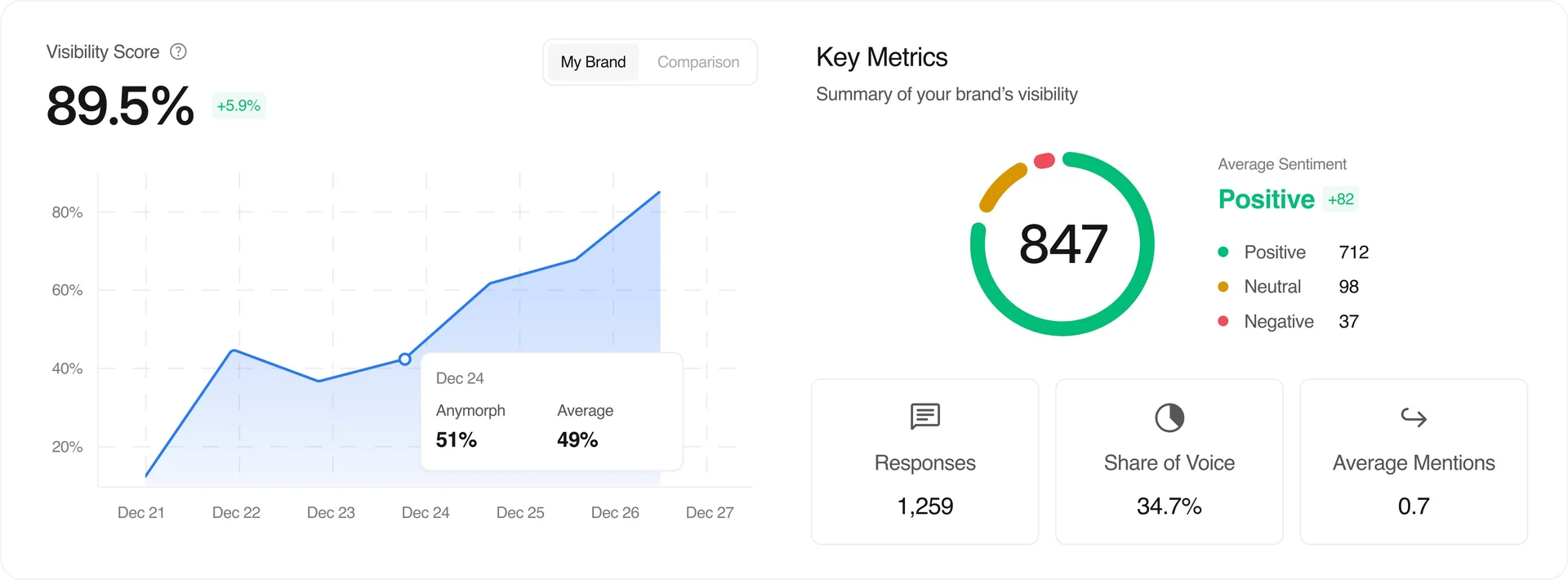
For over a decade, SEO strategy was dictated by Domain Authority (DA)—a metric driven heavily by backlinks. In the generative search era, this model is obsolete. By 2026, the correlation between traditional Domain Authority and AI search rankings plummeted to a mere 0.18.
In stark contrast, semantic completeness—defined as the comprehensive depth and breadth of a topic’s coverage—has emerged as the primary ranking driver with a 0.87 correlation. If your page only targets a single keyword while your competitor’s page answers the primary question, the secondary implications, and the third-order technical details, the AI will cite the competitor.
What makes content "reference-grade" for AI engines?
Reference-grade content uses logical chunking, schema markup, and clear formatting to make information instantly extractable for large language models.
AI models do not read narrative marketing copy the way humans do; they parse and extract structured data. If your competitor’s content is easier to extract, they will win the citation, even if your underlying product is better. Content specifically structured to be "reference-grade"—meaning it is chunked into logical segments, is highly quotable, and utilizes proper Schema.org tagging—receives 3x to 5x more citations than standard long-form text.
| Feature | Standard Content | Reference-Grade Content (GEO) |
|---|---|---|
| Structure | Long, unbroken paragraphs | Short chunks, bulleted lists, tables |
| Headings | Clever, vague marketing headers | Direct, question-and-answer format |
| Data Tags | Basic HTML tags | Detailed Schema.org markup |
| Freshness | Published once, rarely updated | Updated annually with new statistics |
| Quotes | Vague external claims | Direct, verifiable expert insights |
Furthermore, LLMs heavily bias toward fresh, recently updated data. 65% of AI bot hits target content published within the last year, while 89% focus on content updated within the last three years.

Why are competitors winning through community platforms?
Competitors often dominate AI answers without ranking their own websites by maintaining an active presence on authoritative community discussion platforms.
If your competitor is dominating ChatGPT or Perplexity results but their actual domain isn't linked, they are likely weaponizing community platforms. Community networks like Reddit and Quora capture a massive 52.5% of total AI citations, leaving only 47.5% for brand-owned domains.
Understanding How AI Engines Recommend Brands: ChatGPT, Perplexity, Google AI, and Claude requires acknowledging that each engine has distinct data preferences:
- •
Perplexity: Leans heavily on community social proof. In January 2026, Reddit alone accounted for 24% of its citations.
- •
ChatGPT: Tends to favor more encyclopedic, canonical, and established sources, such as Wikipedia or highly structured industry wikis.
Diagnosis Step
Search for your competitor's brand alongside target keywords on Perplexity. If the citations lead back to Reddit threads, Quora answers, or third-party review aggregators, your primary visibility gap is a lack of external "social proof," not necessarily an on-site content issue.
Does traditional organic rank still impact AI citations?
High traditional organic search rankings significantly increase the likelihood that an AI engine will select a page as a primary citation source. While AI search relies on different ranking mechanisms than traditional search, the two ecosystems are deeply intertwined. LLMs often execute real-time web searches using traditional engine APIs to ground their answers.
Because of this real-time retrieval process, there is a direct pipeline between SERP position and AI citation rates. The #1 organic SERP position carries a 33.07% AI Overview citation probability. This advantage falls off rapidly as you move down the page, dropping to just 13.04% for results sitting at position #10. Executing Generative Engine Optimization for AI Product Companies (Playbook + Page Types) requires stabilizing your baseline organic ranks while deploying advanced GEO tactics.
Priority Action Plan: Close the Gap
Closing the competitor visibility gap requires auditing technical crawlability, restructuring content for extraction, and seeding community discussions. Execute this priority action plan:
1. Technical Fix
Audit your bot mitigation tools immediately. Ensure that no AI crawlers (GPTBot, ClaudeBot, etc.) are blocked via robots.txt or CDN rules.
2. Semantic Overhaul
Stop keyword stuffing. Map out the second and third-order questions related to your core product, and update your landing pages to achieve true semantic completeness.
3. Structural Update
Re-format existing high-value content into reference-grade assets. Use clear H2/H3 chunking, integrate data tables, and apply Schema markup.
4. Community Presence
Actively participate in Reddit and Quora. Seed natural discussions and provide high-value, un-gated answers to capture the 52.5% of citations flowing from community hubs.
5. Freshness Injection
AI bots crave recent data. Audit your core "proof assets" and refresh them annually to stay within the 65% first-year freshness window.
Frequently Asked Questions
Why is my competitor showing up in ChatGPT and I am not?
Your competitor likely has fewer technical blocks (like robots.txt restrictions), higher semantic completeness on their web pages, or a stronger presence on community platforms like Reddit. ChatGPT prefers to cite sources that provide complete, easily extractable data without paywalls or bot blockers.
Does Domain Authority matter for Perplexity and Claude?
Very little. As of 2026, the correlation between traditional Domain Authority and AI search rankings has dropped to 0.18. Generative engines care much more about "semantic completeness" (0.87 correlation) and reference-grade formatting than they do about traditional backlink profiles.
How quickly do AI bots index new content?
AI bots prioritize recent data highly. Approximately 65% of AI citations target content published within the last year, and 89% focus on content updated within the last three years. Updating your core assets annually ensures you remain in this optimal freshness window.
What exactly is "reference-grade" content?
Reference-grade content is specifically formatted for machine extraction rather than human narrative reading. It utilizes clear question-format headings, logical bulleted lists, Markdown tables, short summary capsules, and Schema.org markup. This formatting receives 3x to 5x more citations than traditional long-form paragraphs.