
Answer Engine Optimization (AEO) vs. Generative Engine Optimization (GEO)
The search environment is shifting rapidly as zero-click searches have reached a rate of approximately 58% to 60%. While traditional SEO brings a 1.19% conversion rate, optimizing for AI through AEO and GEO drives highly qualified traffic that converts at 3.76%.
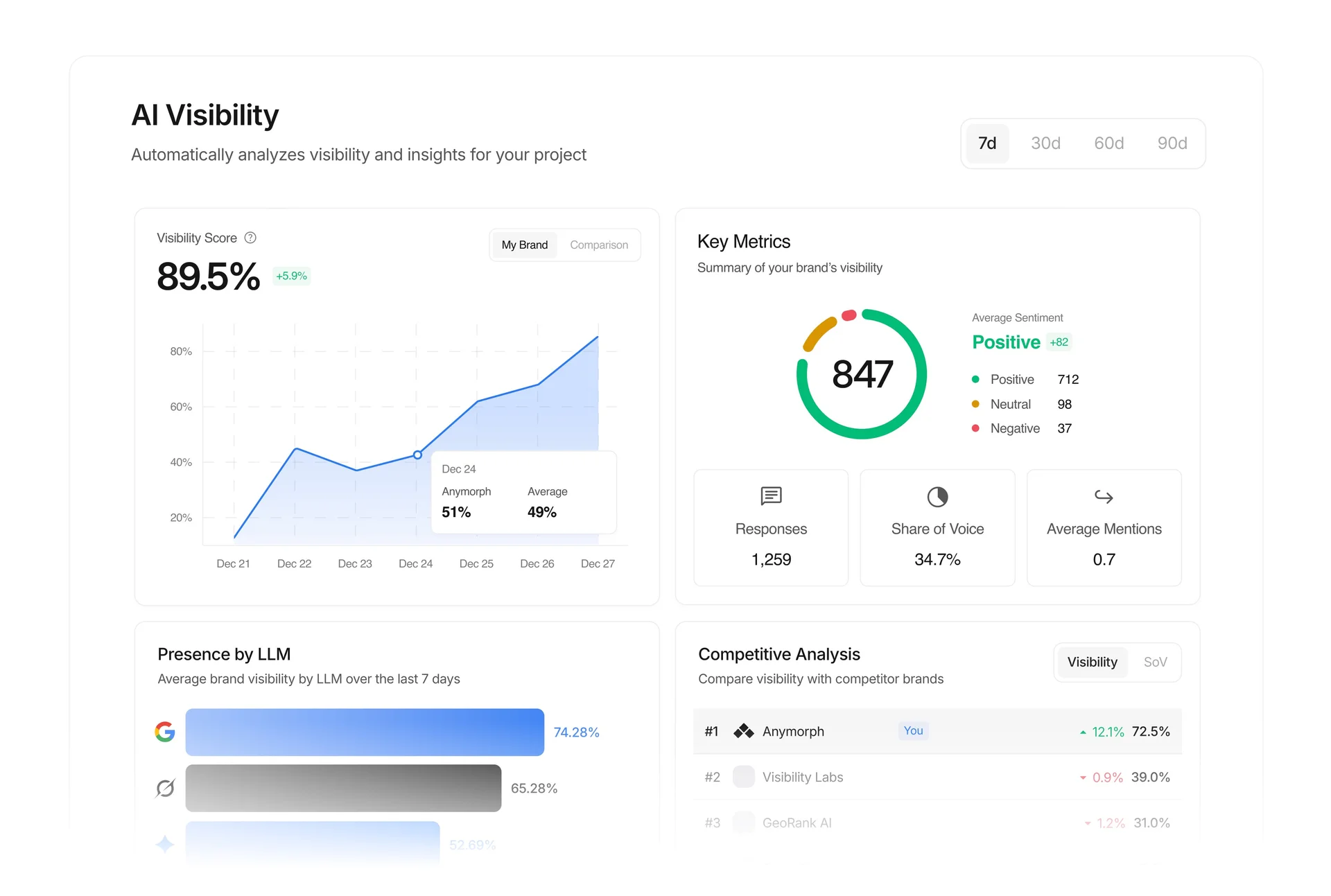
What is GEO?
Generative Engine Optimization is the technical process of structuring content so Large Language Models reliably cite your brand in answers.
As the digital environment evolves toward conversational interfaces, Generative Engine Optimization (GEO) focuses on platforms including Perplexity, ChatGPT Search, and Google AI Overviews. Unlike traditional search algorithms that rely heavily on backlinks and domain authority, generative engines retrieve information based on vector embeddings and semantic relevance.
By 2026, relying purely on traditional search is a failing strategy. Google's AI Overviews trigger for approximately 13% to 48% of search queries, creating an environment where GEO is essential to combat the 58% zero-click rate.
What is AEO?
Answer Engine Optimization specifically focuses on delivering concise, direct factual responses designed to win featured snippets and voice.
While GEO addresses complex, multi-step reasoning queries handled by LLMs, AEO targets immediate, fact-finding user intent. Answer engines prioritize the rapid delivery of information—think of a user asking Siri, Alexa, or Google Voice Search for the definition of a specific B2B software term.
Because users receiving direct answers have their specific friction points resolved, they enter the sales funnel with higher intent. Combined, AI-driven traffic via AEO and GEO converts at 3.76%.
The Evolution from SEO to AEO to GEO
Search marketing has transitioned from ranking ten blue links to answering targeted questions and influencing generative AI output. A critical reality of this evolution is the emergence of the "citation gap."
Traditional SEO
- Goal: Rank in Top 10
- Intent: Browsing & Research
- Output: List of links
- Metric: Click-Through Rate
Answer Engine Opt. (AEO)
- Goal: Secure Featured Snippet
- Intent: Quick Fact-finding
- Output: Single direct answer
- Metric: Brand Impressions
Generative Engine Opt. (GEO)
- Goal: Be the cited source
- Intent: Complex problem solving
- Output: Multi-source response
- Metric: Citation Likelihood
of ChatGPT's most-cited pages have absolutely zero organic visibility on traditional Google search. Traditional ranking signals do not guarantee generative citations.
Learn what features to look for in AI visibility analyticsHow do AEO and GEO tactics compare?
AEO relies on brief formatting and schema markup, whereas GEO requires deep factual density and vector-based passage-level content upgrades. To satisfy both answer engines and generative AI models, B2B websites must operate on a dual architecture.
A AEO Tactics (Direct Answer Focus)
- Schema Markup: Implementation of FAQPage, Product, and HowTo schema is mandatory to flag factual data directly to parsers.
- Question-First Architecture: H2 and H3 subheadings should be formatted exactly how users ask questions.
G GEO Tactics (LLM & Reasoning Focus)
- Passage-Level Optimization: Content must be clustered semantically to aid vector embeddings and query-fan-out expansion.
- Entity Recognition: Utilizing entity-rich content helps AI contextually identify your brand as a foundational authority.

Why are AI engines hallucinating citations?
Large Language Models often prioritize linguistic probability over factual accuracy, resulting in high rates of fabricated or incorrect links. Over 60% of AI-generated answers currently contain incorrect citations.
For B2B brands, an AI hallucinating a competitor's feature set onto your product—or linking to a dead page when discussing your pricing—can instantly kill a high-value enterprise deal.
Traditional domain authority has only a moderate correlation with AI citation accuracy. Instead, explicit source citations and highly consistent brand data across all platforms are the strongest drivers of citation accuracy. You must feed the machine clearly formatted, undeniable facts.
How does AI search impact B2B conversions?
Traffic originating from AI search engines delivers significantly higher intent, resulting in dramatically improved conversion rates for B2B.
When a prospect uses ChatGPT or Perplexity to research B2B software, they are often having a multi-prompt conversation. They ask for comparisons, request specific use cases, and narrow down feature requirements. By the time the AI engine cites your website as the ultimate solution, the prospect is heavily pre-qualified.
AI-referred visitors convert at 4.4 times the rate of traditional organic search traffic.
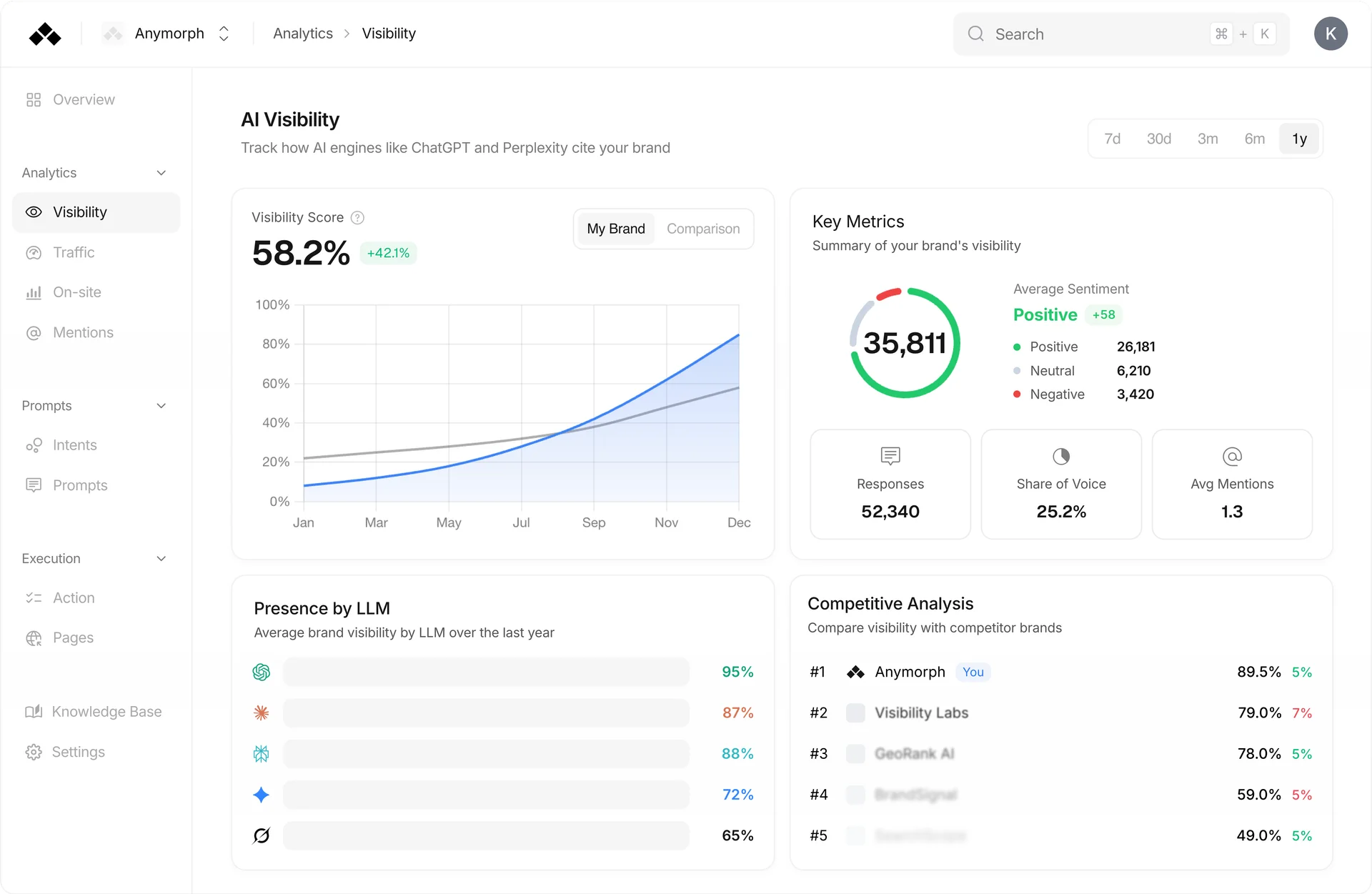
Automate your continuously updated citation-ready pages
Maintaining high citation probability requires autonomous systems that instantly adapt content structures to match shifting LLM preferences.
The core challenge of GEO is scale. Generative engines constantly update their retrieval algorithms. Managing this manually across thousands of blog posts, product pages, and documentation hubs is impossible for human teams.
Anymorph operates as an autonomous website OS that creates and maintains on-brand content specifically optimized for these AI search engines. Stop losing qualified buyers to AI hallucinations and outdated search strategies.
Frequently Asked Questions
What is the difference between AEO and GEO?
AEO (Answer Engine Optimization) optimizes content to provide short, direct answers for featured snippets and voice assistants. GEO (Generative Engine Optimization) structures deep, factually dense content to be cited by Large Language Models like ChatGPT and Perplexity during complex, multi-step reasoning queries.
Why doesn't traditional SEO guarantee AI citations?
AI search engines use vector embeddings and semantic relationships rather than traditional backlinks. As a result, 28.3% of the most-cited pages in ChatGPT have zero organic visibility on traditional Google search. Relying on SEO alone leaves a massive citation gap.
How can I stop AI from hallucinating facts about my brand?
Domain authority is not enough to stop hallucinations. Brands must increase their "factual density" by using explicit source citations, clearly structured schema markup, and continuously updated citation-ready pages that feed LLMs unambiguous, mathematically verifiable data.