
The Ultimate 90-Day GEO Strategy for SaaS Teams
Improve brand AI visibility with our 90-day GEO strategy. Learn to close citation gaps, build share of answer, and win in ChatGPT and Google AI Overviews.
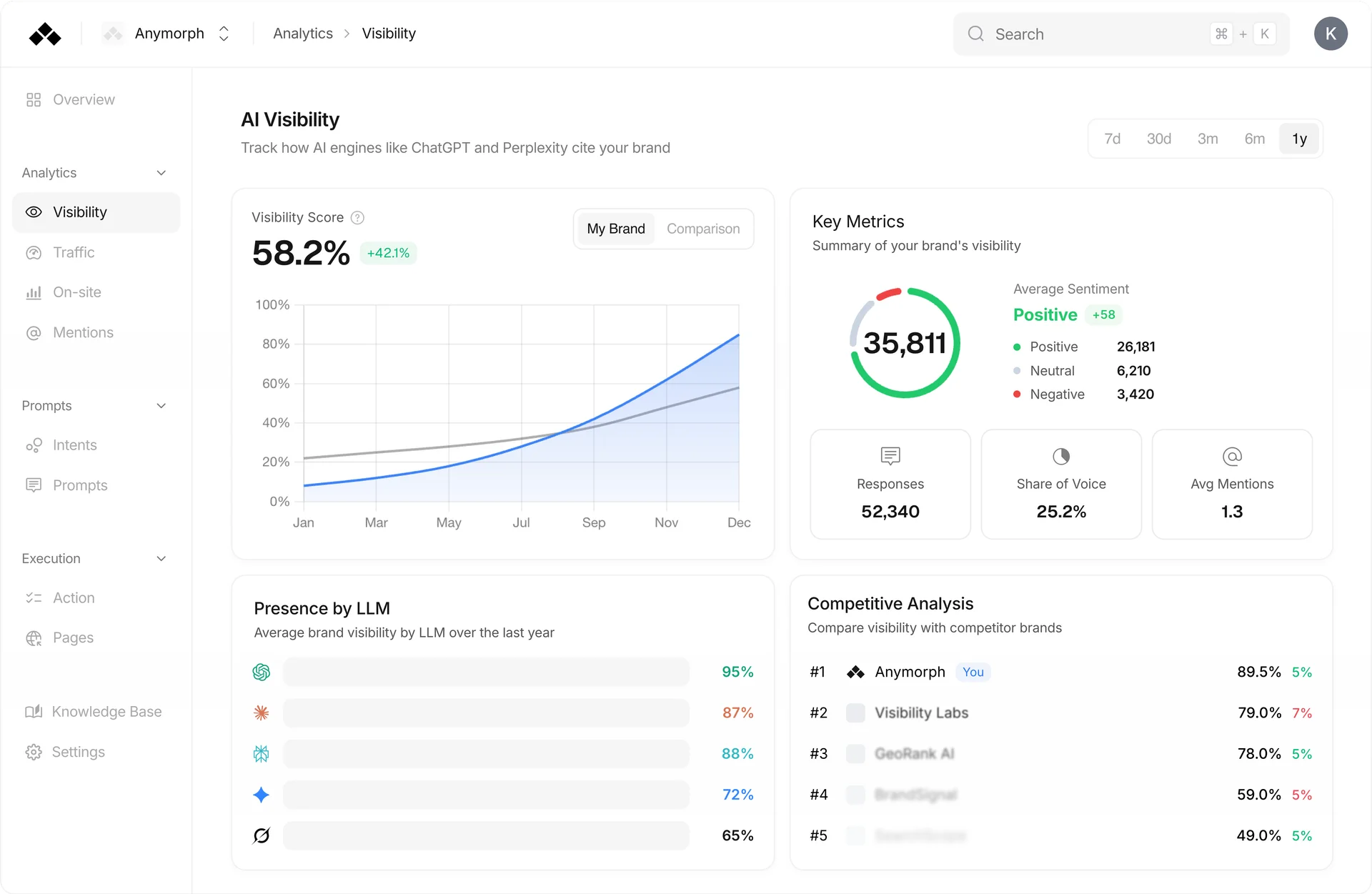
Halt the visibility drop from AI search results
Generative Engine Optimization (GEO) is the next evolution of search, focusing on securing placements within AI-generated answers. With 65% of Google searches now ending without a click, traditional SEO is no longer enough to maintain your SaaS pipeline. This 90-day playbook provides the exact framework needed to identify citation gaps, publish high-authority coverage pages, and become the preferred answer for engines like ChatGPT, Perplexity, and Google AI Overviews.
- ✓ Recover traffic lost to zero-click search behaviors
- ✓ Secure 3:1 visibility advantage through brand mentions
- ✓ Implement LLM-ready content templates optimized for 2026 search
Why is your SaaS losing visibility to AI Overviews?
Your brand is likely facing an 'AI Visibility Gap.' Traditional SEO focuses on keywords, but AI search engines prioritize semantic density and factual authority. If your content isn't structured for LLM ingestion, AI bots will skip your pages, leading to a massive drop in referred traffic.
Research indicates that AI-referred sessions surged by 527% within a single year, yet most B2B SaaS teams are still using outdated content frameworks that AI cannot easily parse or cite. Without a dedicated GEO strategy, your competitors will capture the 'Share of Answer' (SoA) before you even realize the rules have changed.
How do you implement a 90-day GEO strategy?
Building a citation powerhouse requires a three-phase operational approach designed to move from audit to authority.
Days 1-30: The Audit & Baseline
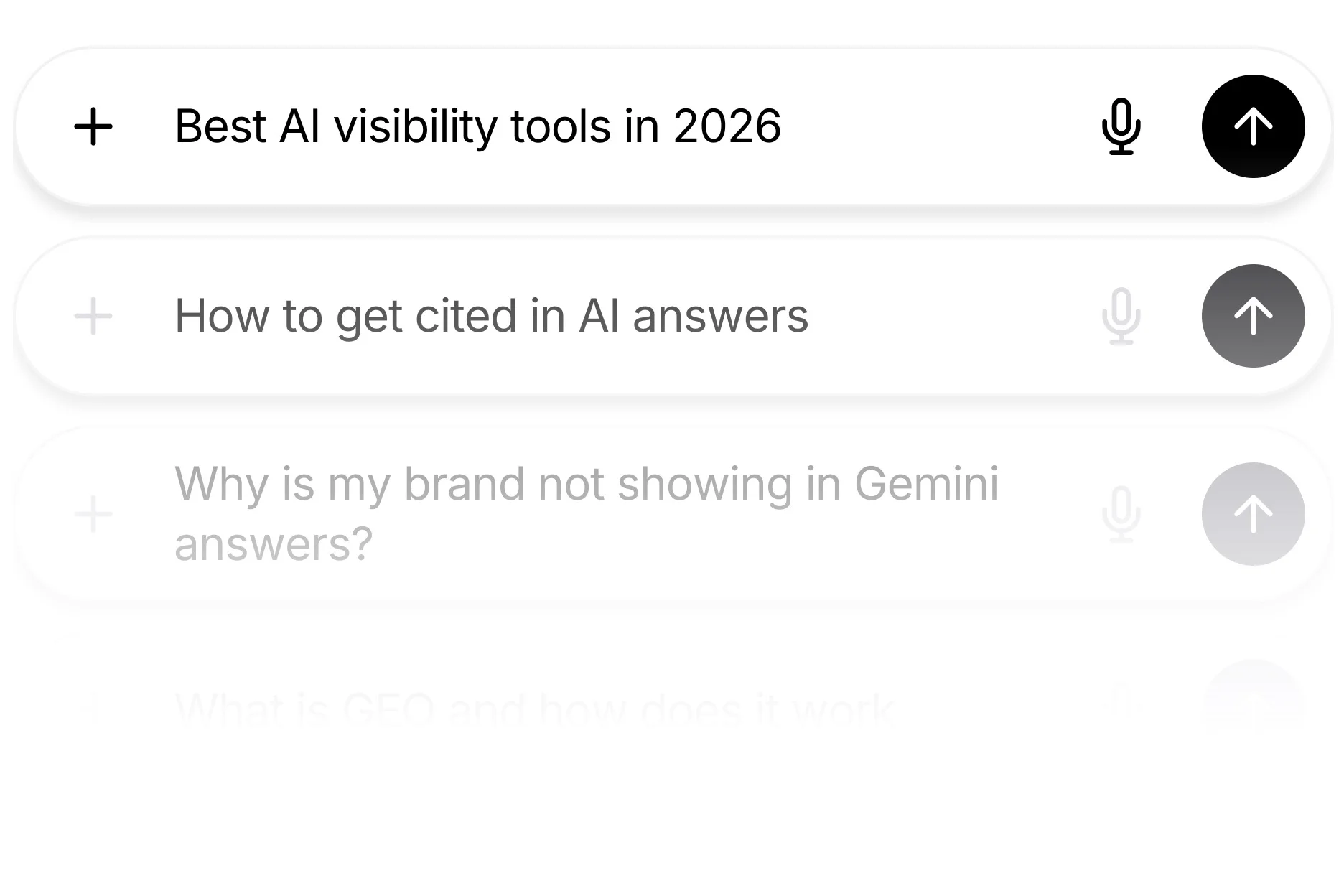
Start by calculating your AIGVR (AI-Generated Visibility Rate). Test 20-30 core SaaS prompts on tools like Perplexity and Gemini to see if you are being cited. Ensure your robots.txt isn't blocking essential crawlers like GPTBot or Google-Extended.
Days 31-60: Content Operations
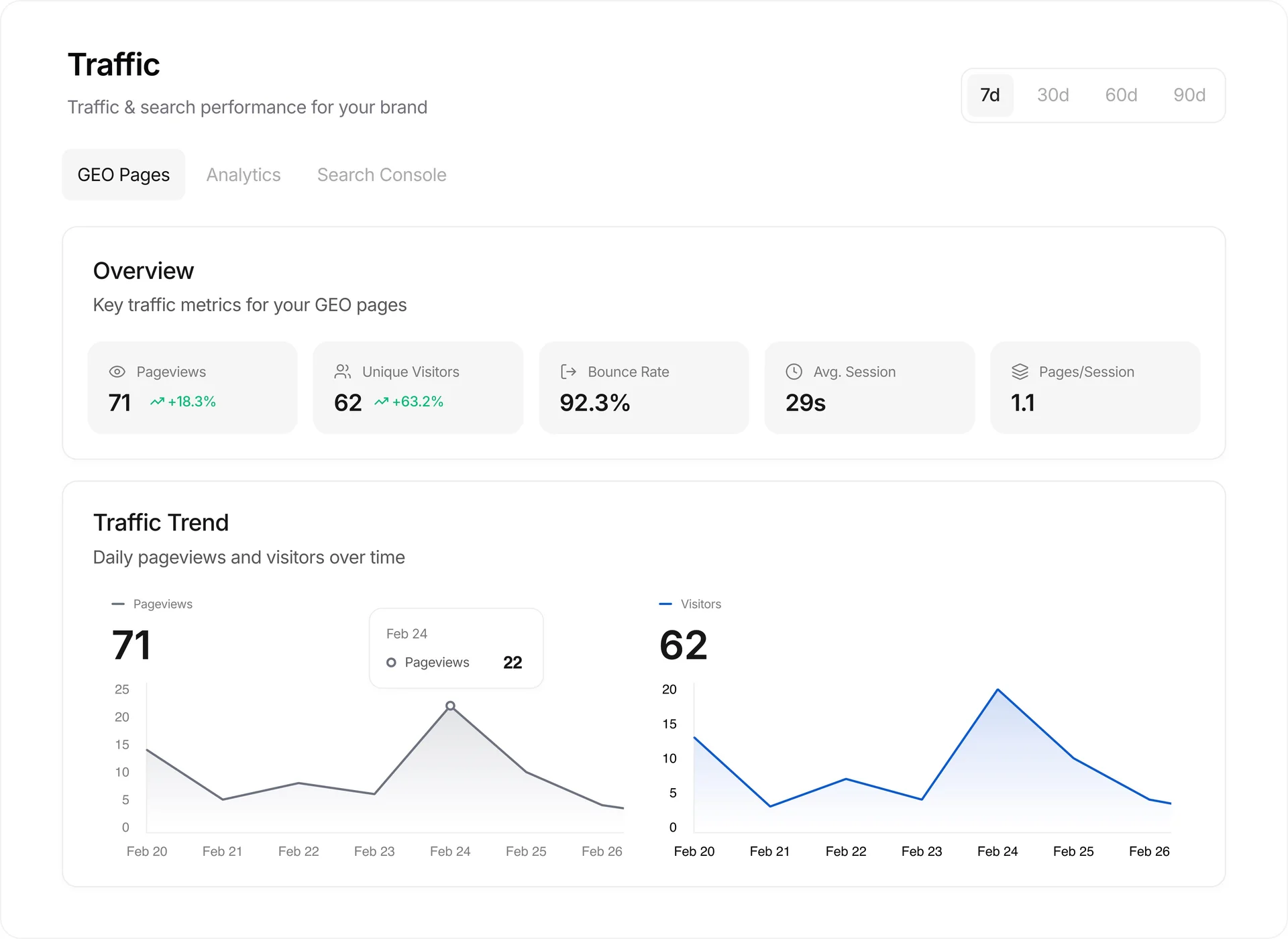
Shift to 'Coverage Pages.' Use headers in question format and ensure your first 40 words provide a direct, quotable answer. Research shows this 'direct-answer' optimization can increase citation frequency by up to 40%.
Days 61-90: Authority Flywheel
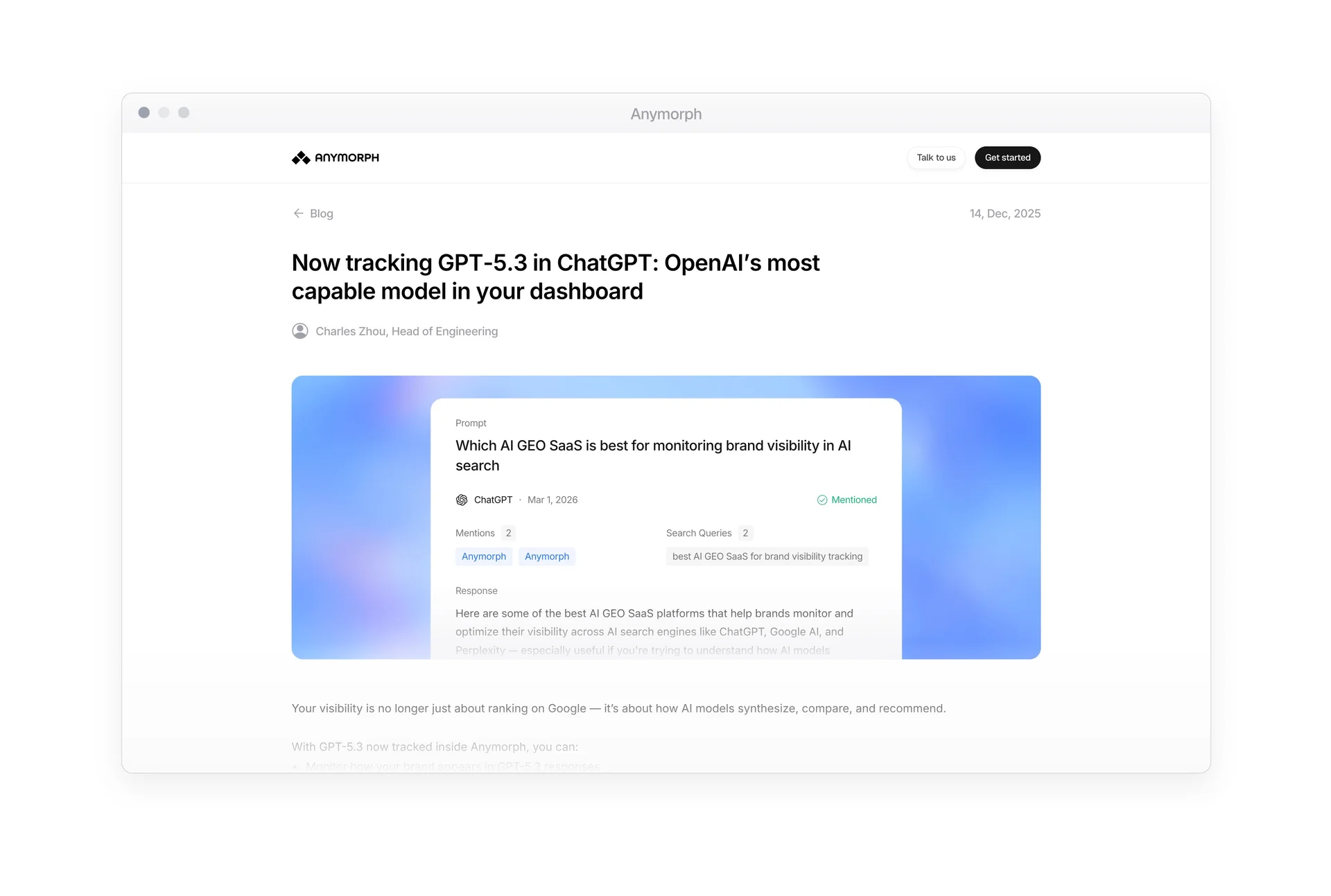
Focus on off-page sentiment. Brand mentions are now 3x more influential than backlinks for AI rankings. Build a sentiment graph by optimizing third-party review platforms like G2 and Capterra, which serve as foundational training data for newer LLMs.
Building an LLM-Ready Template Backlog
To achieve consistent citations, your content must follow a technical 'GEO Checklist.' This ensures that every page you publish is optimized for both human value and AI extraction.

Direct Answer Blocks
Place a concise 40-60 word answer at the top of every article to act as a TL;DR for AI scrapers.
Fact-Dense Content
Include at least one statistic or unique data point every 200 words to increase authority signals.
Technical Schema
Implement FAQPage and TechArticle structured data to help engines parse your software specs.
Sentiment Alignment
Use authoritative, Wikipedia-style neutrality to match the preferred tone of ChatGPT and Claude.
Transform your AI visibility today
Stop wondering why your competitors are winning the AI Overviews. Deploy our 90-day GEO framework to secure your brand's place in the future of search.
Frequently Asked Questions
Q: What is the primary difference between SEO and GEO?
A: SEO focuses on ranking high in traditional search engine results pages through keywords and backlinks, while GEO focuses on being cited as a primary source within the generated answers of AI engines like ChatGPT and Perplexity.
Q: How often should SaaS teams update their GEO coverage pages?
A: SaaS teams should update key 'Comparison Pages' monthly. AI engines prioritize freshness and data accuracy, and regular updates prevent competitors from capturing updated comparative search queries.