
The Ultimate Guide to Generative Engine Optimization (GEO) in 2026
TL;DR: Generative Engine Optimization (GEO) is the discipline of structuring digital content to earn citations in AI platforms like ChatGPT, Perplexity, and Google AI Overviews. Organic click-through rates for informational queries featuring Google AI Overviews decreased by 61% between mid-2024 and September 2025.
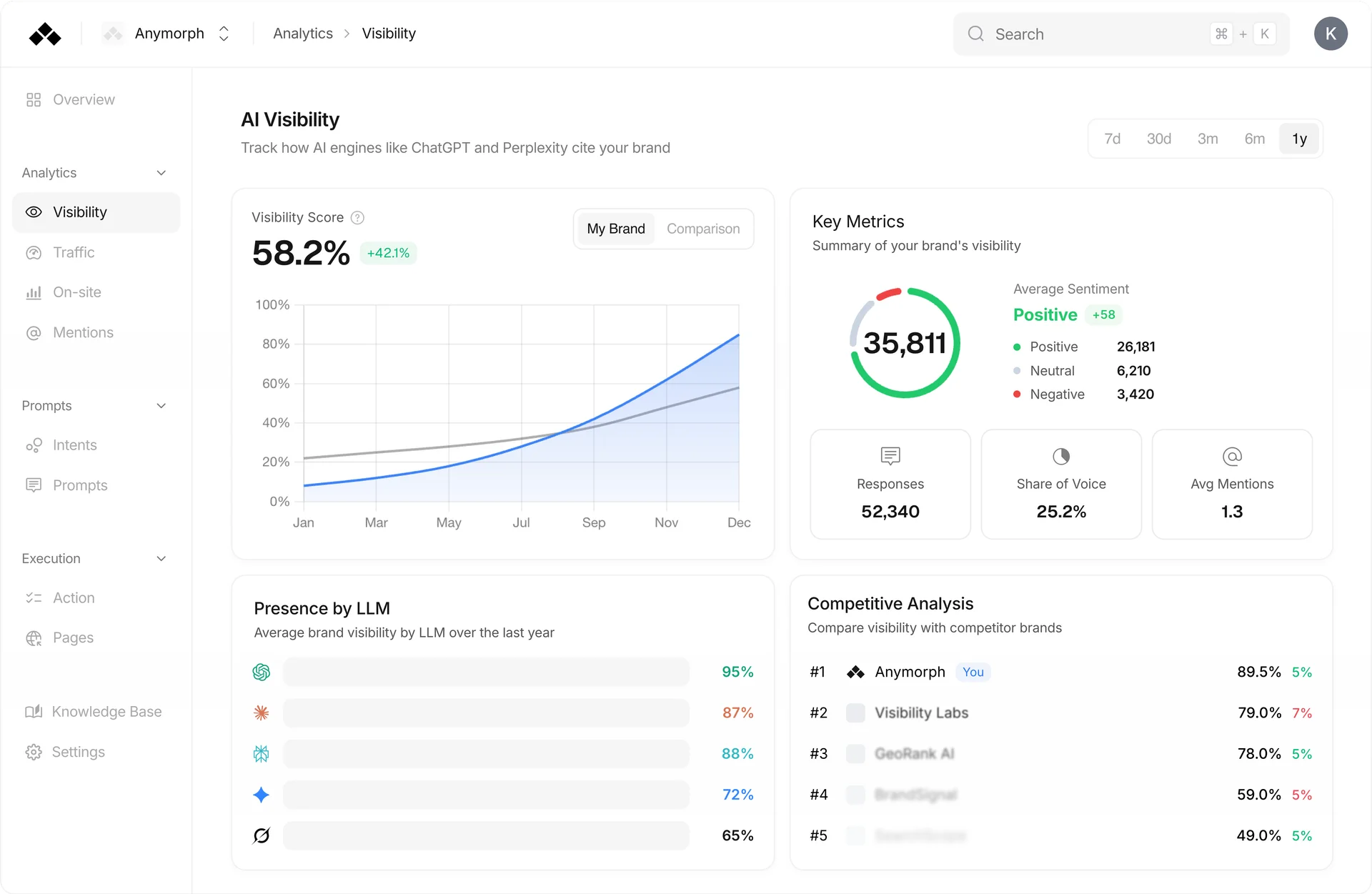
What is Generative Engine Optimization (GEO)?
Generative Engine Optimization (GEO) is the strategy of structuring content to be indexed and cited by artificial intelligence search models. Unlike traditional search marketing, which focuses on providing a list of links ranked by keyword relevance, generative engine optimization focuses entirely on citation share.
Citation share measures the percentage of citations in a dataset that mention a specific brand, author, or domain within AI-generated answers. ChatGPT, Claude, and Google AI Overviews synthesize answers from indexed web content instead of only presenting a list of search results.
For digital marketers, this requires a fundamental pivot from traditional keyword density toward deep semantic richness and entity relationship building. Content must be inherently machine-readable, logically structured, and definitively authoritative on a given subject to be synthesized effectively by an algorithm. Implementing natural contextual flow and strict structured markup allows these generative models to parse information efficiently.
The Data Behind the Shift
Between June 2024 and September 2025, the organic click-through rate (CTR) on queries triggering Google AI Overviews dropped from 1.76% to 0.61%—a staggering 61% decrease.
GEO vs SEO vs AEO
Understanding the modern discovery environment requires clearly distinguishing between Search Engine Optimization (SEO), Answer Engine Optimization (AEO), and Generative Engine Optimization (GEO). Each discipline serves a different user intent and targets a completely distinct algorithmic mechanism.
SEO
Search Engine Optimization
- Primary Target Traditional Search Engines (Google, Bing)
- Success Metric Search Rank & Click-Through Rate (CTR)
- Goal Drive traffic to a website via a link list
AEO
Answer Engine Optimization
- Primary Target Voice Assistants & Direct Answer Boxes
- Success Metric Answer Ownership & Zero-Click Visibility
- Goal Provide a single, immediate factual answer
GEO
Generative Engine Optimization
- Primary Target Large Language Models (ChatGPT, Perplexity)
- Success Metric Citation Share & Attribution Frequency
- Goal Be synthesized into a detailed AI response

How GEO Impacts B2B Marketing
Generative Engine Optimization transforms B2B marketing by converting AI chat platforms into primary lead generation channels for high-intent buyers. Historically, B2B purchasing decisions involved lengthy independent research phases across multiple vendor websites. Today, B2B buyers consolidate this research phase by asking AI platforms to compare software vendors and summarize complex enterprise solutions.
If a B2B brand is not cited in these AI-generated vendor comparisons, it effectively does not exist in the buyer's consideration set.
Technical Optimization for AI Search
While content quality dictates whether an AI wants to cite your brand, technical infrastructure dictates whether the AI can cite your brand. If a large language model crawler cannot efficiently access, parse, and categorize the data on your server, your brand will be excluded.
AI Crawlability & llms.txt
Websites must ensure their robots.txt files do not inadvertently block LLM user agents (such as GPTBot or ClaudeBot). The llms.txt file is a proposed markdown-based standard designed to help large language models understand and use website content at inference time.
Deep Schema Markup
Brands must deploy extensive JSON-LD schema markup to define entities, establish relationships between concepts, and hardcode indisputable facts. This markup acts as a direct translation layer for AI models, removing the guesswork from content categorization and building entity authority.
Server Performance
Server performance plays a disproportionate role in AI indexing.
Looking for the right infrastructure? Explore the Best Generative Engine Optimization (GEO) Tools for SaaS Brands or learn more about GEO for AI Product Companies.
Frequently Asked Questions
What does GEO stand for in AI search?
In the context of artificial intelligence and search marketing, GEO stands for Generative Engine Optimization. It distinguishes itself from traditional Search Engine Optimization (SEO) by specifically targeting the algorithms of generative models rather than traditional index-based search algorithms.
How does AI search impact brand discovery?
AI search radically alters brand discovery by transitioning users from a "search and click" journey to an "ask and receive" experience. Because AI models synthesize multiple sources into one cohesive answer, users no longer need to browse multiple websites. If your brand is not actively cited within that initial generated synthesis, you are entirely excluded from the modern discovery process.
Does GEO replace traditional SEO?
No. The main misconception about generative engine optimization is that it replaces traditional search marketing. GEO is an evolutionary layer built on top of strong technical and content foundations. The technical requirements for GEO—such as ultra-fast load times, clear contextual flow, and strong schema markup—actively improve traditional SEO performance simultaneously.
Ready to capture your AI citation share?
Stop writing for traditional keyword crawlers and start writing for machine synthesis. Evaluate how easily an AI can synthesize your website content and build verifiable entity authority.
Book a demo