
GEO Strategy by Company Stage for B2B SaaS Teams
Generative Engine Optimization (GEO) is redefining B2B software discovery, with AI engines driving up to 18% of traffic. See how GEO priorities change for early-stage, growth-stage, and established B2B SaaS teams, with timelines, team structure, and investment guidance.
What is Generative Engine Optimization (GEO) in B2B SaaS?
Generative Engine Optimization (GEO) is the systematic process of structuring website content to rank natively within AI search engine responses. Unlike traditional Search Engine Optimization (SEO) which optimizes for blue links on a Google Search Engine Results Page (SERP), GEO targets large language models (LLMs) and "answer engines" like ChatGPT, Claude, and Perplexity. These AI models synthesize information from across the web to provide direct, comprehensive answers to user queries.
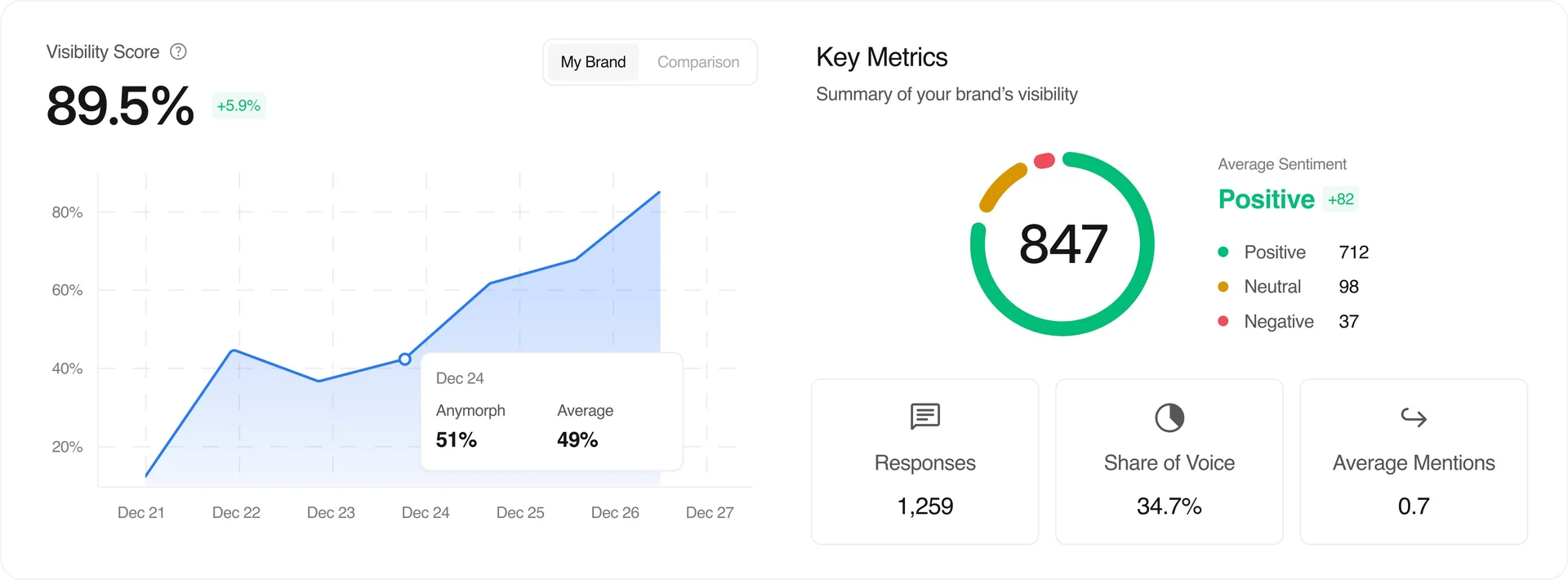
Anymorph analysis shows that traditional keyword-stuffing tactics actively harm performance in generative contexts. AI models prioritize information density, primary data, and multi-modal content optimized for Retrieval-Augmented Generation (RAG). To achieve visibility, B2B SaaS brands must transition from creating top-of-funnel listicles to developing highly authoritative, deep-dive content that AI engines trust enough to cite directly in their output.
How does B2B discovery happen in 2026?
Modern B2B buyers now discover software by asking specialized technical questions to AI platforms instead of relying on traditional search engines. The shift away from legacy search engines has accelerated rapidly. Currently, 47% of B2B buyers initiate their research via AI search engines (Presence AI, 2026). This reliance becomes even more pronounced for complex purchases, with AI adoption climbing to 62% for technical or specialized queries.
By early 2026, platforms such as ChatGPT and Perplexity are responsible for 11% to 18% of all discovery traffic within the B2B SaaS sector (Digital Applied, 2026). For B2B marketing teams, capturing this traffic is highly lucrative. Users querying AI engines tend to be further down the funnel, seeking specific comparisons and implementation details rather than generic overviews.
As a result, GEO-attributed traffic delivers 35% higher lead conversion rates and 32% higher close rates than traditional SEO. For teams transitioning their legacy content, our AI Search Playbook for SEO-First Companies in 2026 provides a foundational roadmap.
GEO Strategy by Company Stage
Investment in GEO should scale in inverse proportion to a company's traditional search entrenchment. Here is how early-stage, mid-market, and enterprise teams should allocate resources.
Early-Stage Startups
Early-stage B2B software companies must aggressively target AI search engines to bypass entrenched competitors dominating legacy search results. For startups lacking domain authority in traditional Google search, generative engines offer an unprecedented opportunity to outrank legacy incumbents.
- • Budget Allocation: 60–70% of total search budget.
- • Strategic Goal: Rapid visibility and market disruption.
- • Timeline: Immediate execution via a 90-Day GEO Strategy before the low-competition window closes in late 2026.
Mid-Market SaaS ($10M–$100M)
Mid-market software companies should dedicate twenty-five percent of their search budget to artificial intelligence while protecting existing revenue. The approach requires balancing aggressive innovation with pipeline stability.
- • Budget Allocation: 25% GEO, 65% traditional SEO, 10% experimental.
- • Strategic Goal: Transition without disruption. Protect existing pipeline while capturing AI share.
- • Focus: Upgrading existing high-converting technical pages to meet generative engine standards.
| Metric | Early-Stage Startup | Mid-Market SaaS ($10M-$100M) | Enterprise SaaS ($100M+) |
|---|---|---|---|
| GEO Budget Split | 60–70% of search budget | 25% of search budget | 30% of search budget |
| Primary Goal | Rapid visibility & market disruption | Protect existing pipeline while capturing AI share | Brand control & Reputation Defense |
| Content Focus | Deep-dive technical guides & proprietary data | Upgrading existing high-converting pages | High-level architectural data & factual accuracy |
| Timeline Imperative | Immediate (Window closes late 2026) | Gradual transition (6-12 month rollout) | Ongoing technical infrastructure maintenance |
Why do enterprise SaaS brands focus on reputation defense?
At the enterprise level ($100M+ revenue), the focus of generative optimization shifts from aggressive customer acquisition to protecting an already dominant market position. Current benchmarks show that enterprise brands allocate exactly 30% of their total search budget to GEO initiatives (Presence AI, 2026).
The primary strategic goal is "Reputation Defense" (Deepak Gupta, 2026). Because AI engines occasionally generate factually incorrect information (hallucinations), large enterprises risk having their pricing models, integration capabilities, or security standards misrepresented in executive-level AI queries.
To combat this, enterprise SEO teams must ensure their technical infrastructure supports RAG and multi-modal AI systems perfectly. This involves managing extensive schema markup, structured data, and highly specific developer documentation to ensure LLMs parse their complex product suites accurately. For organizations at this scale, establishing the correct Technical Architecture of GEO Implementation is a foundational requirement.
How to structure a team for Generative Engine Optimization?
Adapting a traditional SEO department to generative realities does not require entirely replacing the marketing team, but it does require a structural pivot. Initial GEO operations typically require 0.5 to 2 full-time employees (FTEs) dedicated specifically to AI search formatting, semantic entity management, and LLM behavior analysis.
Existing SEO practitioners can generally adapt to GEO requirements within a 2–3 month learning curve. These professionals must shift their focus from analyzing search volume and keyword density to understanding semantic relationships, natural language processing (NLP), and citation formatting.
For companies lacking the internal bandwidth to upskill their teams quickly, partnering with external specialists is a viable alternative. Deciding between a Full-Service GEO Agency vs Software Platform depends largely on the company stage and available internal headcount.

How do you measure GEO ROI and performance?
Because generative engines often provide zero-click answers natively within the chat interface, traditional KPIs like organic session volume and click-through rates (CTR) are becoming obsolete. As of 2025, B2B marketers have universally adopted a new set of discovery impact metrics (ABM Agency, 2025):
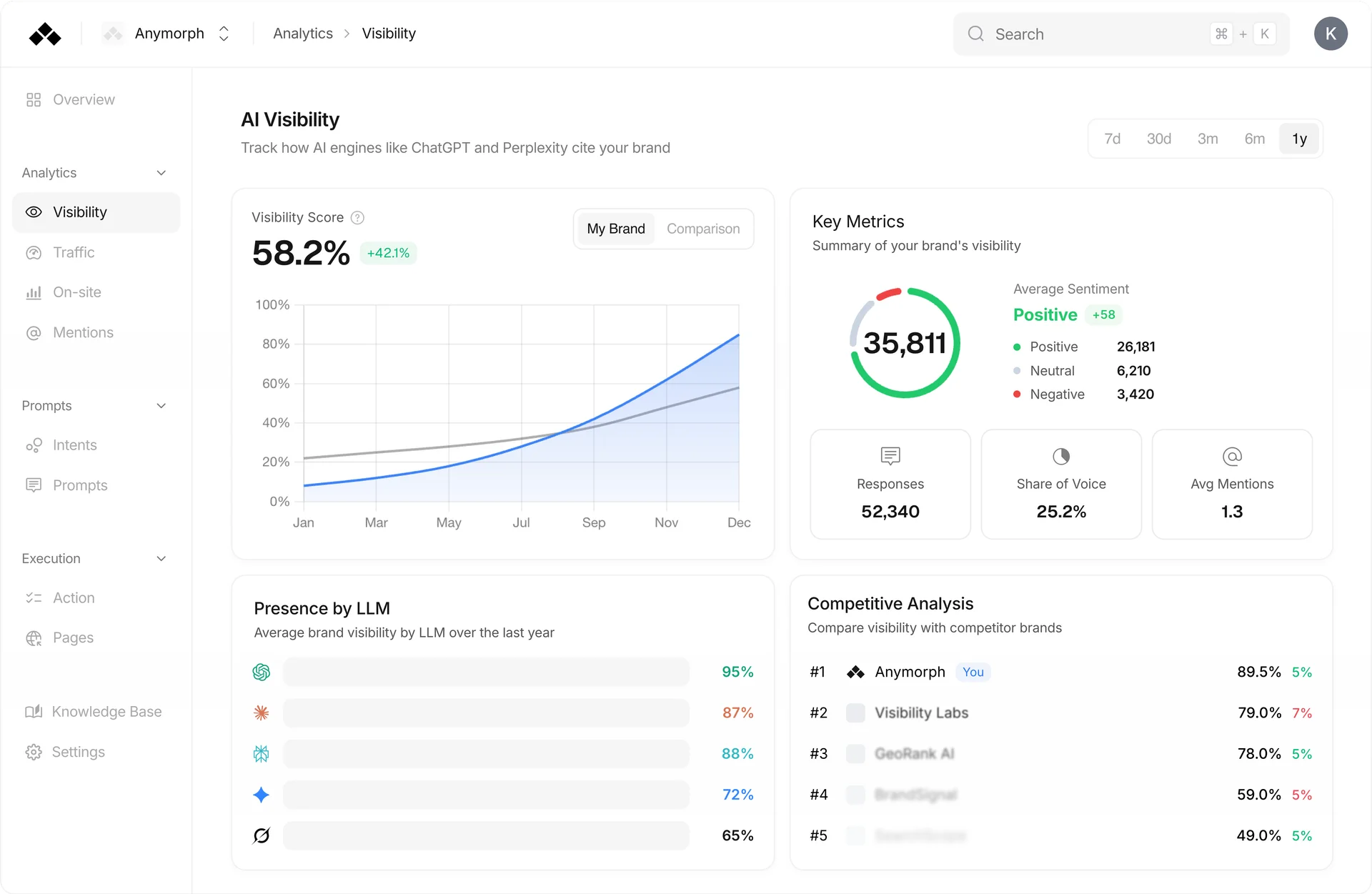
- • AI-Generated Visibility Rate (AIGVR): This metric tracks the frequency with which your software brand appears in AI-generated answers for specific target queries. It serves as the baseline measurement of brand presence in LLMs.
- • AI Engagement & Citation Rate (AECR): Visibility alone is insufficient; brands must drive verification. AECR measures the percentage of AI answers that include a direct, hyperlinked citation to your domain, driving the high-intent referral traffic that leads to closed-won deals.
- • AI Share of Voice: This comparative metric calculates your brand's prominence in AI responses relative to your direct competitors. A high share of voice means the AI is recommending your solution as the default standard in your category.
What is the timeline for seeing returns on GEO investment?
Despite the rapid evolution of AI platforms, indexing, verifying, and prioritizing new factual data still takes time. Teams should set expectations for a 6–12 month ROI timeline, which closely mirrors the historical maturation cycle of traditional SEO campaigns.
This required runway makes immediate action critical. The "early mover" advantage in the generative space is strictly temporary. The current environment, where nimble SaaS startups can easily outrank enterprise incumbents who have yet to adapt their content to RAG principles, will not last.
With the strategic window for low-competition visibility expected to close by late 2026, leadership teams who delay budget reallocation will face severely compounded acquisition costs in the years to follow.
Calculate my GEO visibility scoreFrequently Asked Questions
Can we repurpose our existing SEO content for GEO?
Yes, but simply republishing is rarely effective. Existing SEO content must be deeply restructured to increase information density, remove keyword-stuffing, add verifiable statistics, and expand the word count to the optimal 3,000–5,000 word range required by AI models.
Which AI search engines matter most for B2B SaaS?
While ChatGPT remains the dominant player overall, Perplexity and Claude are heavily favored by technical buyers and developers. Your GEO strategy must account for how each specific LLM structures its retrieval and citation logic.
Do we need a dedicated software platform to track AIGVR?
Tracking AI-Generated Visibility Rate manually is nearly impossible at scale because LLM outputs are dynamic and highly personalized. B2B SaaS teams typically require specialized rank-tracking software designed specifically for generative engines to measure AIGVR, AECR, and Share of Voice accurately.
How does technical SEO overlap with GEO?
Technical SEO forms the foundation of GEO. Fast load times, clean site architecture, and flawless mobile experiences remain critical. However, GEO places a much heavier emphasis on comprehensive Schema markup, structured data arrays, and clean API documentation that allows AI scrapers to parse complex relationships effortlessly.