
Full-Service GEO Agency vs. Software Platform: The Complete Guide
With traditional search volume projected to drop by 25% by 2026, shifting to Generative Engine Optimization is critical. Agencies offer specialized expertise, but self-serve platforms provide a more cost-effective alternative. Here is how to choose the right path for your brand.
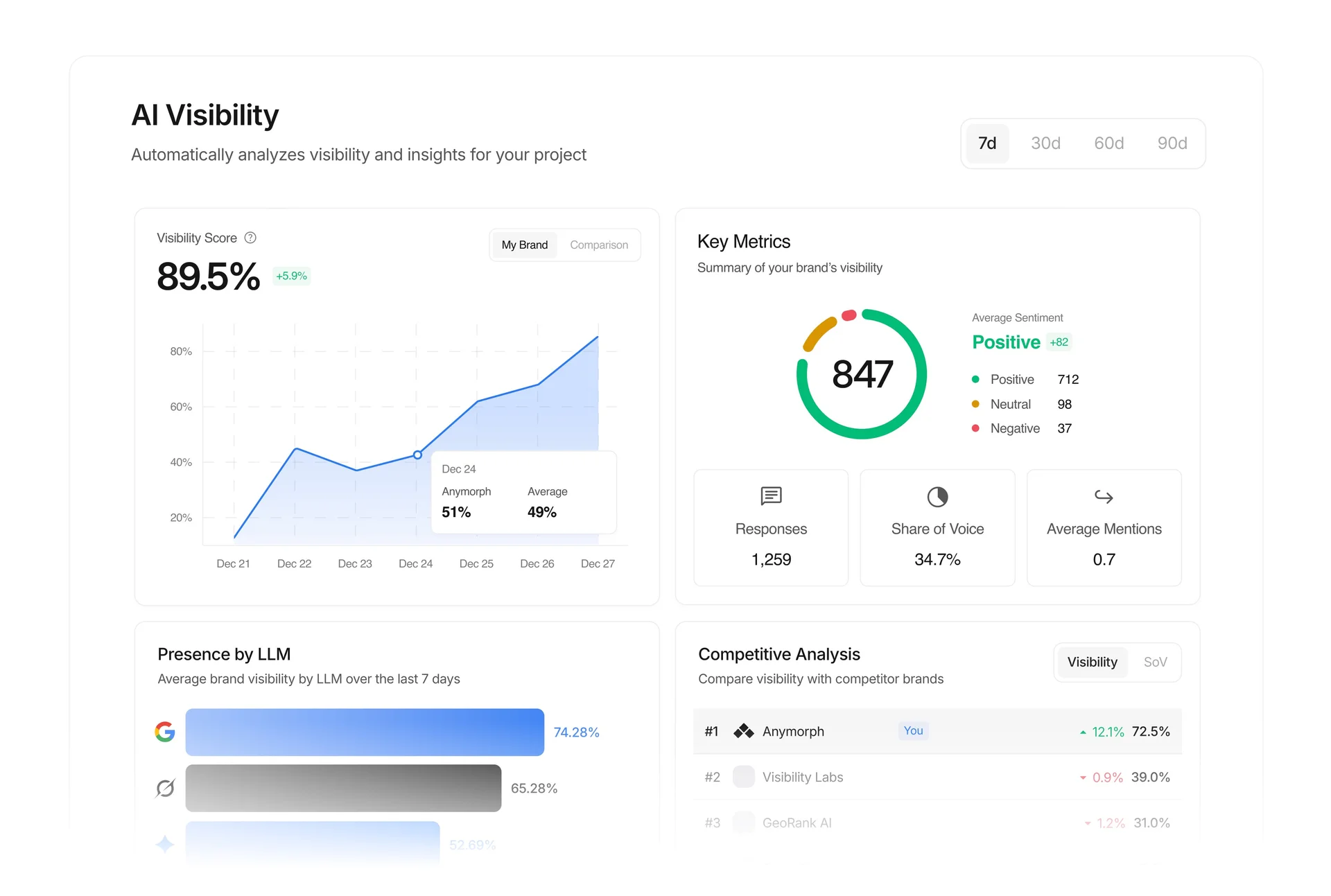
Why Brands Are Switching to GEO in 2026
Generative Engine Optimization (GEO) is a strategy designed to increase brand visibility within AI-driven search engines like Perplexity and ChatGPT. Unlike traditional SEO, which relies on keyword density and backlinks, GEO focuses on how Large Language Models (LLMs) synthesize and cite information.
Traditional search engine volume is projected to decline by 25% by 2026 due to the rapid consumer adoption of AI chatbots (Gartner, 2024). This behavioral shift fundamentally breaks the old organic traffic playbook. Users no longer want to click through five different websites; they want an immediate, synthesized summary.
To succeed, you need a comprehensive entire strategy that optimizes for semantic richness, verifiable statistics, and high citation potential.
Answer Engine Optimization (AEO) is a targeted subset of GEO focused on structuring data—utilizing schema markup, FAQ formats, and concise definitional statements—so answer engines can confidently pull your exact phrasing.
Agency vs. Software Platform: The 4 Dimensions
A full-service GEO agency manages your strategy externally, while software platforms provide self-serve tools that require internal execution. Here is how they compare across critical business dimensions.
| Dimension | Full-Service Agency | Software Platform | In-House Team |
|---|---|---|---|
| Cost | High ($2k–$15k/mo) | Low ($99–$299/mo) | Variable (Salary + Software) |
| Control | Outsourced strategy & deployment | High (Brand-led execution) | Maximum control |
| Scalability | High (Rapid resource scaling) | Limited by internal staff capacity | Limited by slow hiring speed |
| Update Speed | Fastest | Slow (Dependent on internal time) | Moderate |
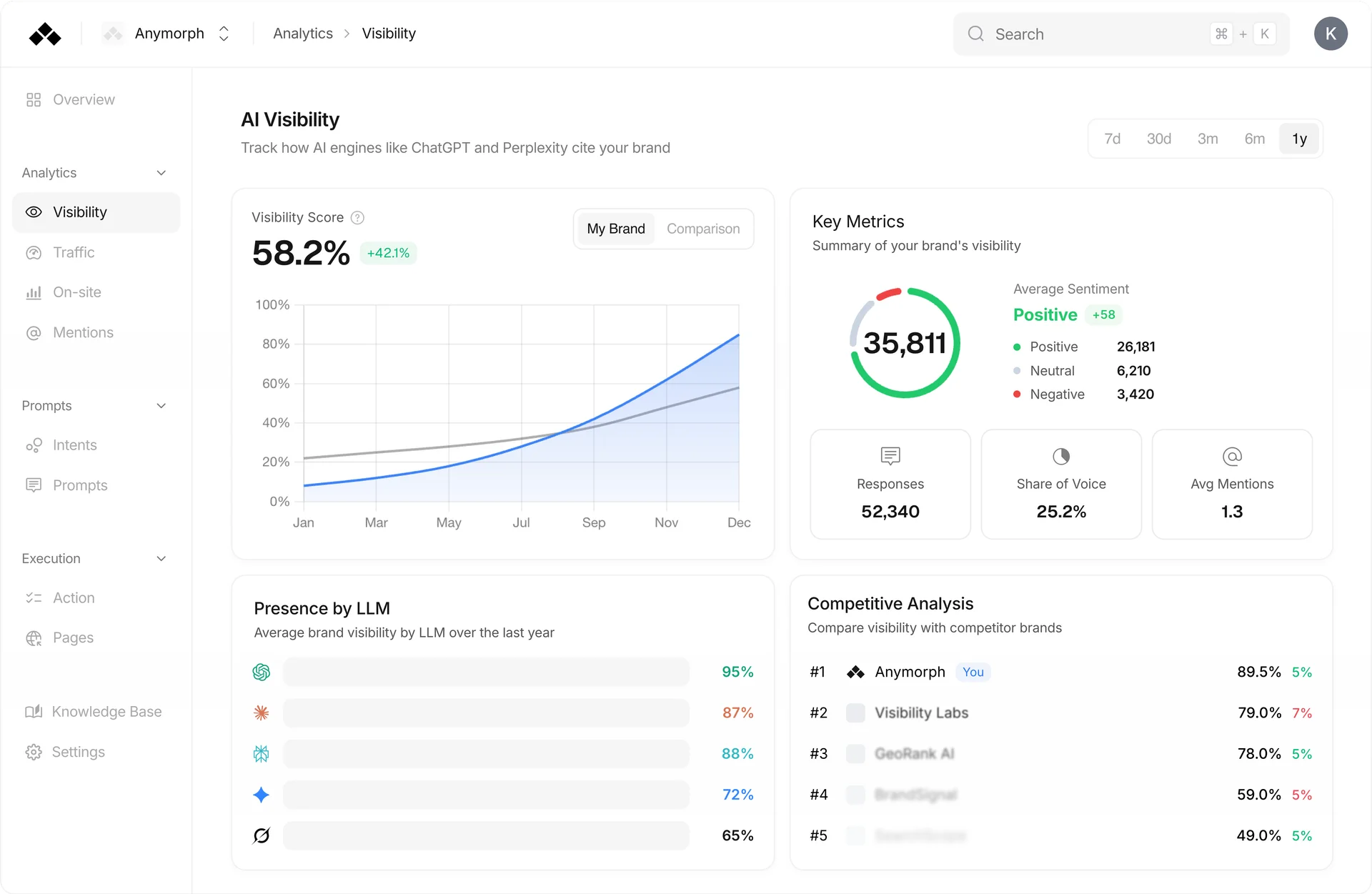
Cost & ROI: The Hidden Economics
Pricing models vary wildly. Standard GEO agency retainers range from $3,000 to $15,000 per month. On the other end, self-serve software platforms offer a much lower barrier to entry.
However, looking strictly at subscription costs creates a false economy. Self-serve tools require dedicated internal effort to analyze data and deploy content changes.
Superior Lead Quality
Visitors arriving from AI search tools can convert at a rate 23 times higher than regular organic traffic.
Customer Acquisition Cost (CAC)
Agency-led models typically see a much more efficient Customer Acquisition Cost (CAC) compared to in-house only projects.
How to Choose Your Path
The friction between buying a tool and hiring an agency comes down to execution capacity and time-to-impact.
When to Choose an Agency
- You need rapid implementation.
- You lack internal SEO resources or engineering bandwidth.
- You need complex schema markup requiring technical codebase access.
Top Agencies in 2026:
GenOptima, Go Fish Digital, iPullRank, Siege Media.
When to Choose a Platform
- You possess a robust internal content marketing and engineering team.
- You want direct, granular access to ranking data and brand sentiment.
- You can realistically budget dedicated monthly labor for updates.
The Third Option: Autonomous AI Search Optimization
The historical divide has always forced a compromise: pay $10,000 a month for an agency, or pay $100 a month for software and spend 40 hours doing the work yourself. Anymorph bridges this execution gap.
Autonomous OS
Provides comprehensive monitoring and analysis to help you rank in Perplexity, ChatGPT, and Google AI Overviews.
Zero Manual Labor
Eliminates the massive in-house labor requirement while avoiding the staggering costs of an agency retainer.
Continuous Adaptation
Continuously adapts to how LLMs process information, ensuring your brand remains the authoritative source.
Frequently Asked Questions
What is the primary difference between SEO and GEO?
SEO is designed to rank web pages as blue links in traditional search engines based on keywords and backlinks. GEO is designed to make your content the definitive, citable source that AI models use to generate conversational answers. GEO requires much denser fact-inclusion, clearer semantic structure, and rigorous entity definitions.
How do you measure ROI in a zero-click environment?
With nearly 60% of Google searches resulting in zero clicks to external websites, traditional Google Analytics traffic metrics are insufficient. ROI must be measured through Share of Model Voice (how often your brand is cited vs competitors), brand sentiment within the LLM responses, and the correlation between AI visibility and direct/branded search volume increases.
Does my brand really need an agency, or can my current SEO team handle it?
If your current SEO team has the bandwidth to dedicate time specifically to monitoring LLM outputs and rewriting content for AEO standards, you can keep the function in-house. However, data shows in-house teams often suffer from a higher CAC compared to specialized agencies, suggesting a steep and expensive learning curve.
What industries are adopting generative engine optimization the fastest?
Highly regulated, complex industries are leading the charge. Healthcare and financial services are seeing the most rapid adoption. Consumers in these sectors prefer the synthesized, direct answers provided by AI over parsing through dense, technical compliance documents.