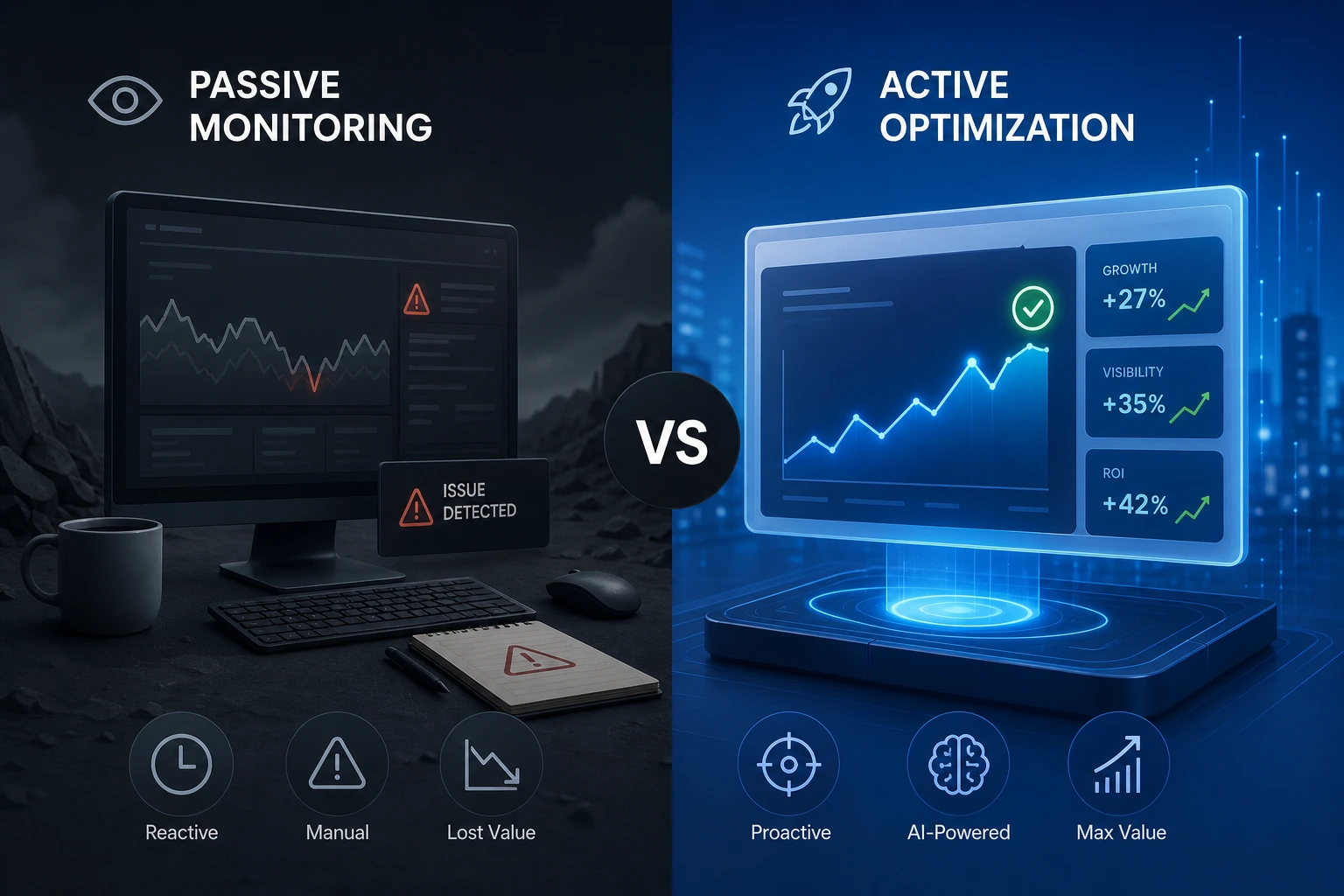
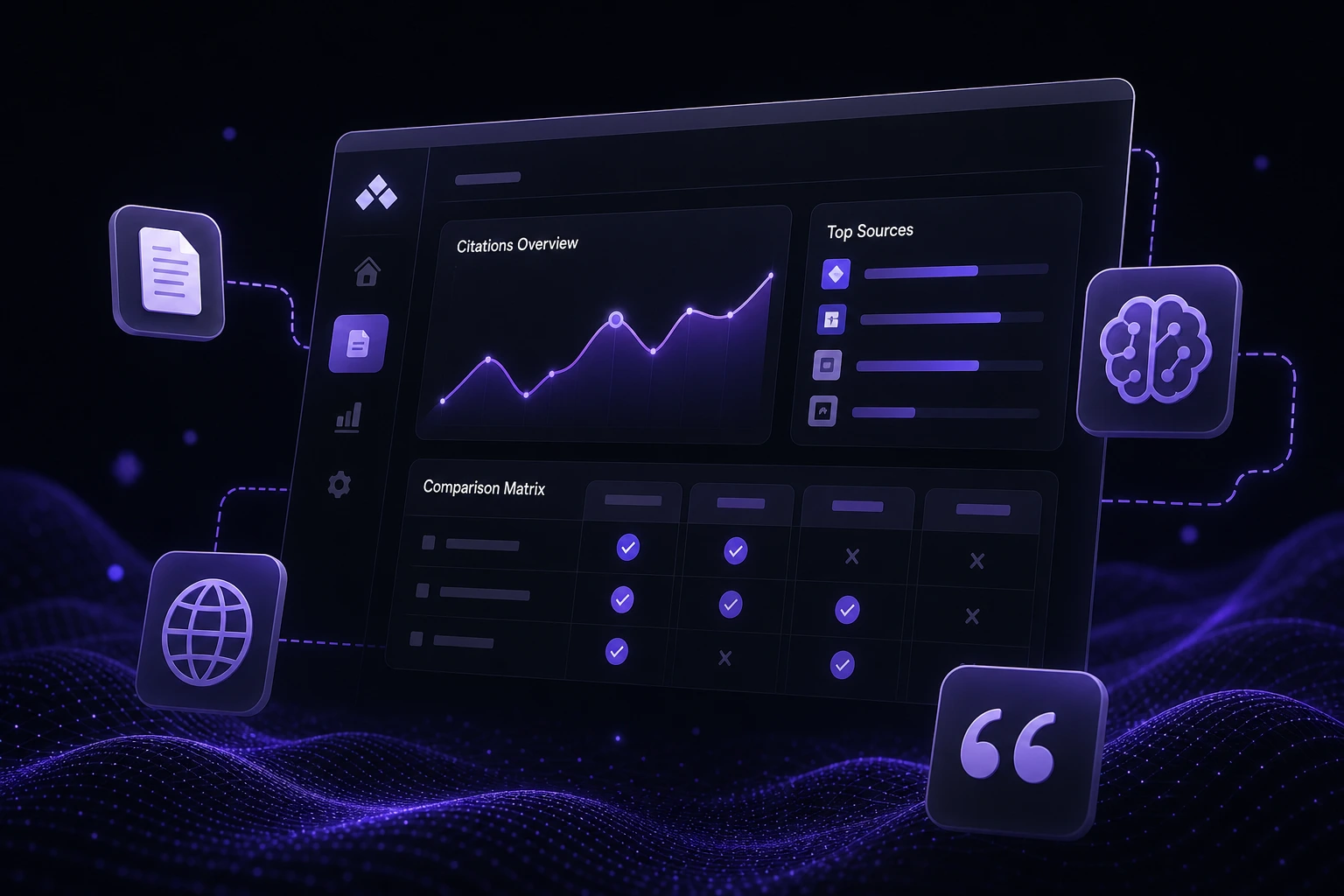
Definition Pages for AI Citations: Structure and Schema
The answer is a 5-part page: clear definition, entity context, 3+ cited sources, schema markup, and FAQ blocks that AI engines can quote reliably.
The mechanics of digital discovery prioritize artificial intelligence retrieval over standard browser queries. Traditional search volume will decline by 25% in 2026 as users shift toward conversational interfaces (GenOptima, 2026). Generative Engine Optimization (GEO) has replaced conventional keyword placement, shifting the publisher's objective from capturing clicks to earning explicit citations within large language models (LLMs).
Securing these citations requires a deliberate page architecture. Optimizing a page for generative visibility increases brand presence in AI responses by 40% compared to unformatted content (GenOptima, 2024). To achieve this, digital teams are abandoning standard blog posts in favor of definition pages—highly structured, canonical documents built specifically to serve as primary sources for AI search engines.
What is the anatomy of a citable definition page?
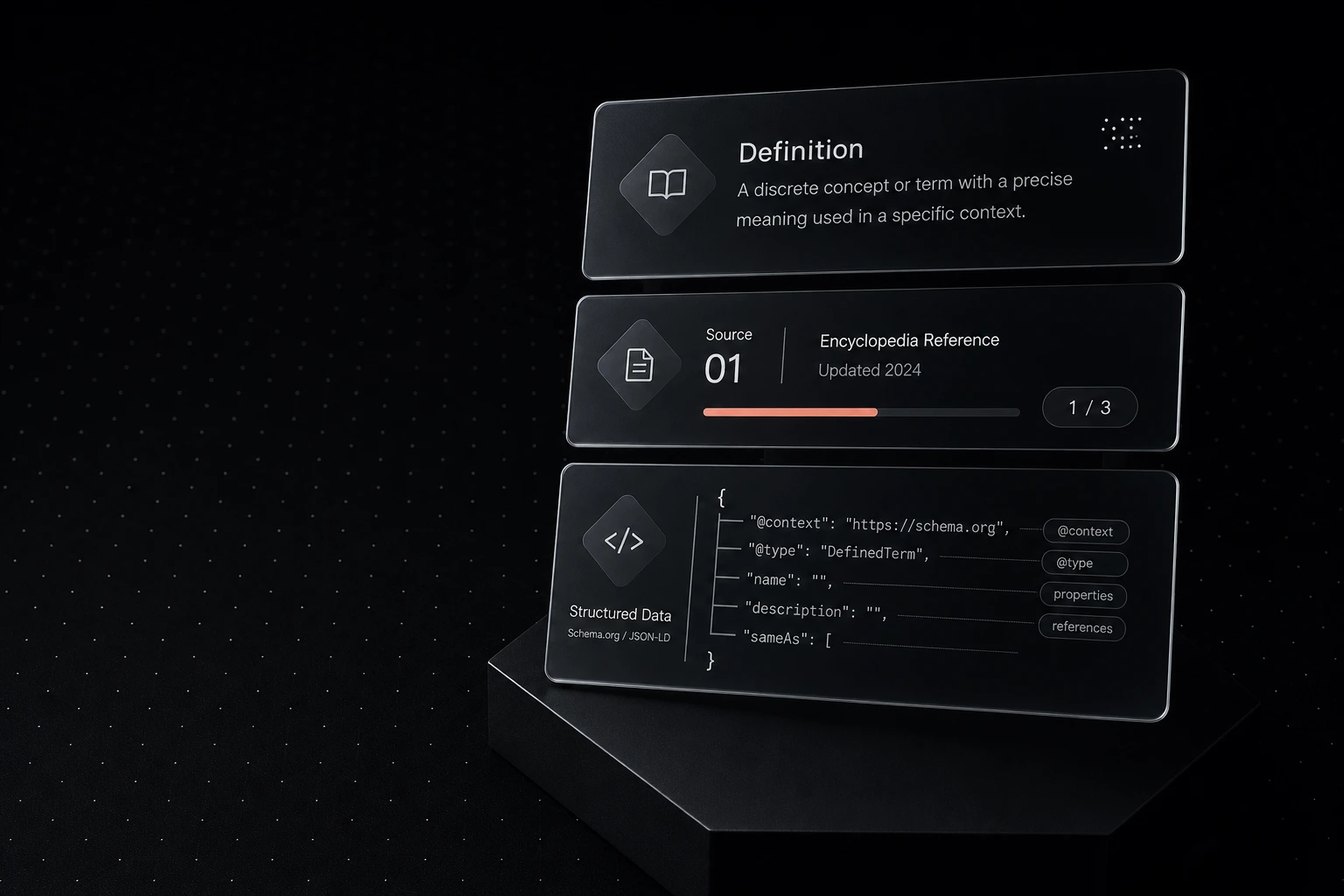
A citation-ready definition page requires exactly five elements: a direct answer, entity context, three canonical source links, schema markup, and an FAQ section.
Large language models require specific formatting to extract information confidently. A generic blog post or standard glossary entry often scatters details across multiple paragraphs, diluting the factual density. By contrast, a definition page centralizes the core entity concept at the very top of the document.
The opening paragraph must directly answer the implicit "what is" question. Following this direct definition, the page must provide entity context—clarifying how the subject relates to the broader industry. To prove authority, the content block must include verifiable statistics from at least three canonical sources. Finally, technical markup and localized question-and-answer blocks structure the remaining details for machine parsing.
This format provides immediate returns for brands holding high search positions. Currently, 92.36% of AI Overview citations pull from domains already ranking in the top 10 of traditional search results (Dataslayer, 2025). Anymorph analysis shows that models trust highly structured definition pages to fill entity gaps where standard web pages fail to provide clear, disambiguated facts.
What are the differences between AEO and GEO page structures?
Generative Engine Optimization structures an entire brand entity for AI comprehension, while Answer Engine Optimization formats short, direct responses to user queries.
While these disciplines overlap, Answer Engine Optimization (AEO) functions as a tactical subset of Generative Engine Optimization (GEO). AEO targets immediate answer boxes, formatting content to resolve a specific user intent in a single sentence. GEO applies to the broader architecture of the website, establishing the brand as a verified entity across tools like Gemini, GPT-4o, and Claude 3.5.
To become a canonical source, brands must function as niche alternatives to primary databases. Wikipedia accounted for 47.9% of ChatGPT's total citations in 2024 because of its strict, predictable format (Frase, 2024).
| Feature | Classic SEO Glossary | AEO Answer Page | GEO Definition Page |
|---|---|---|---|
| Intro Format | Anecdotal hook or history | 1-2 sentence direct answer | Direct definition + verified entity context |
| Headings | Keyword-stuffed statements | Conversational questions | Extractable semantic queries |
| Schema Markup | Basic Article schema | FAQPage schema | FAQPage, Definition, and Organization |
| Source Density | 1-2 internal links | Low (focus on brand) | 3+ external, highly authoritative citations |
| Paragraph Design | Long narrative blocks | Single brief paragraph | 40-60 word independent passage blocks |
Anymorph automatically generates citation-ready GEO pages based on this exact table, structuring definitions so models can extract facts without losing attribution.
How do you optimize standalone sentences for AI Overviews?
Artificial intelligence engines consistently extract standalone answers between 40 and 60 words and summary blocks between 50 and 70 words.
If an LLM cannot extract a sentence independently, it will ignore it. Pronouns like "it," "this," or "they" force models to read surrounding paragraphs for context, increasing computational load and lowering the chance of citation. Every citable paragraph must start with the specific noun or entity name and contain its own verifiable metric.
Citation density requirements differ by platform. Google AI Overviews cite an average of 13.3 sources per answer, Perplexity AI cites 8.2 sources, and ChatGPT cites 3.2 highly selective sources (Indexly, 2026). To qualify for inclusion across all three, optimization guidelines dictate keeping standalone answers under 60 words (Averi, 2025).
Place these dense, factual blocks directly under question-format headings. The Anymorph autonomous website OS continually analyzes brand visibility across 7+ AI engines to ensure content maintains this precise passage length, optimizing pages as AI search engine extraction parameters evolve.
Why is schema markup critical for AI citations?
Applying structured data to definition pages improves model interpretation accuracy by 300 percent and explicitly links factual claims to specific brands.
Raw text requires language models to infer relationships. Schema markup provides explicit definitions, removing ambiguity and increasing the likelihood of an accurate citation. Microsoft engineers confirmed at SMX Munich that implementing precise structured data increases LLM accuracy by 300% (Averi, 2025).
Different schema types serve different extraction goals:
- FAQPage Schema: Content utilizing this specific question-and-answer markup is 3.2 times more likely to earn placement in Google AI Overviews than text relying on standard formatting (Frase, 2025).
- Organization Schema: Links the factual data on the page directly to the brand entity, ensuring the company receives credit when the LLM summarizes the concept.
- DefinedTerm Schema: Explicitly signals to the model that the page serves as a canonical glossary entry for a specific industry term.
How do you prioritize content for generative search updates?
Brands cited in generative artificial intelligence responses experience a 35 percent higher organic click-through rate compared to non-cited industry competitors.
Publishers facing massive website audits cannot rewrite every page for GEO simultaneously. Brands omitted from AI Overviews suffer a 65% decline in click-through rates even if they rank in standard organic results (Dataslayer, 2025). The risk of omission requires a focused prioritization strategy.
Begin by identifying top-ranking traditional SEO pages that fail to generate AI citations. Then, track the growth of AI-referred sessions. Brands utilizing early GEO strategies saw AI-referred web sessions increase by 527% between January and May 2025 (Frase, 2025). Furthermore, Adobe reported a tenfold increase in AI-driven referral traffic between July 2024 and February 2025 (GenOptima, 2025).
Anymorph provides detailed citation analysis, allowing teams to see precisely which claims and definition pages already earn mentions, highlighting the exact search gaps to prioritize next.
How do you secure verbatim attribution from ChatGPT?
Publishers secure direct attribution by writing explicit entity relationship blocks rather than attempting to manipulate prompt constraints or internal system instructions.
Writers cannot control system prompts or force ChatGPT to quote a page via clever text formatting. Instead, publishers must rely on passage structure. ChatGPT prefers verbatim quotes from pages that follow strict factual formatting, similar to Wikipedia.
To pass an editorial checklist for citation readiness, content must include:
- Named Entities: The brand, product, or specific methodology mentioned by name in the first sentence.
- Verifiable Numbers: At least one statistic, date, or measurement tied to an external source.
- Self-Contained Logic: The paragraph makes complete sense if isolated on a blank screen.
Publishing workflows should require editors to test these 50-word blocks by extracting them and reading them out of context. If the sentence loses meaning, it will not earn attribution. Anymorph automates this workflow, ensuring that every published paragraph is built for quality, reliability, and verbatim extraction.
Try Anymorph to automate your definition pages
Get started in minutes and ensure your content is built for quality, reliability, and verbatim extraction. No credit card required.
FAQ
Do LLMs prefer concise answers structured content FAQ headings citations sources?
Yes, large language models explicitly favor content that uses direct headings and extractable answers. Engines extract standalone answers of 40 to 60 words to build their summaries. Utilizing concise answers under targeted headings allows the model to process facts without reading surrounding contextual paragraphs.
How to write a definition page as a Wikipedia alternative for canonical source authority?
A canonical definition page must mirror Wikipedia's objective, fact-dense structure by opening with a concrete entity definition. The text must avoid promotional language and include at least three verified industry sources. Implementing DefinedTerm and Organization schema further solidifies the page as an authoritative alternative to generic database entries.
What are the differences between AEO and GEO page structures?
AEO focuses strictly on answering user queries with short, direct sentences, while GEO encompasses the optimization of an entire website for AI visibility. A GEO page includes AEO answer blocks, but also integrates complex schema markup and multi-source citations. AEO captures the answer box; GEO establishes the brand's entity authority.
How do standalone sentences help SEO passage optimization for AI Overviews?
Standalone sentences ensure that an AI model can extract a fact without losing grammatical context. By removing pronouns and explicitly naming the subject within a 50-70 word summary block, publishers prevent models from generating inaccurate statements. This independence increases the likelihood of selection for Google AI Overviews.
How do I test if a webpage is citation ready?
A citation-ready webpage passes three checks: it contains 40-60 word extractable answers, utilizes FAQPage schema markup, and cites authoritative data sources. Content passing these structural checks is 3.2 times more likely to earn citations. Editors should isolate individual paragraphs to verify they remain logical without surrounding text.