
Anymorph vs Otterly AI: GEO Platform Comparison
The transition to Generative Engine Optimization (GEO) is mandatory. Compare passive monitoring with active optimization to secure your Share of Model.
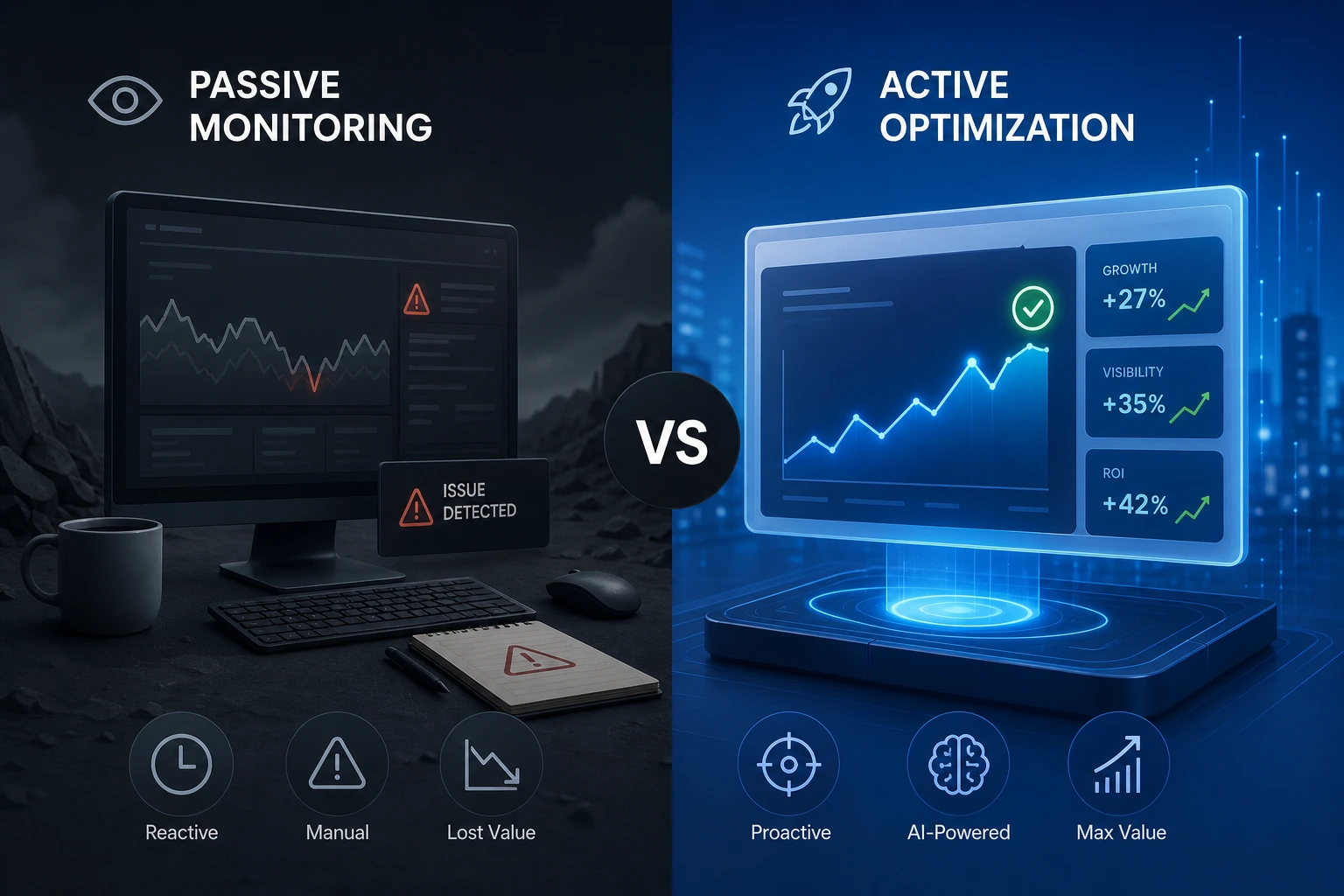
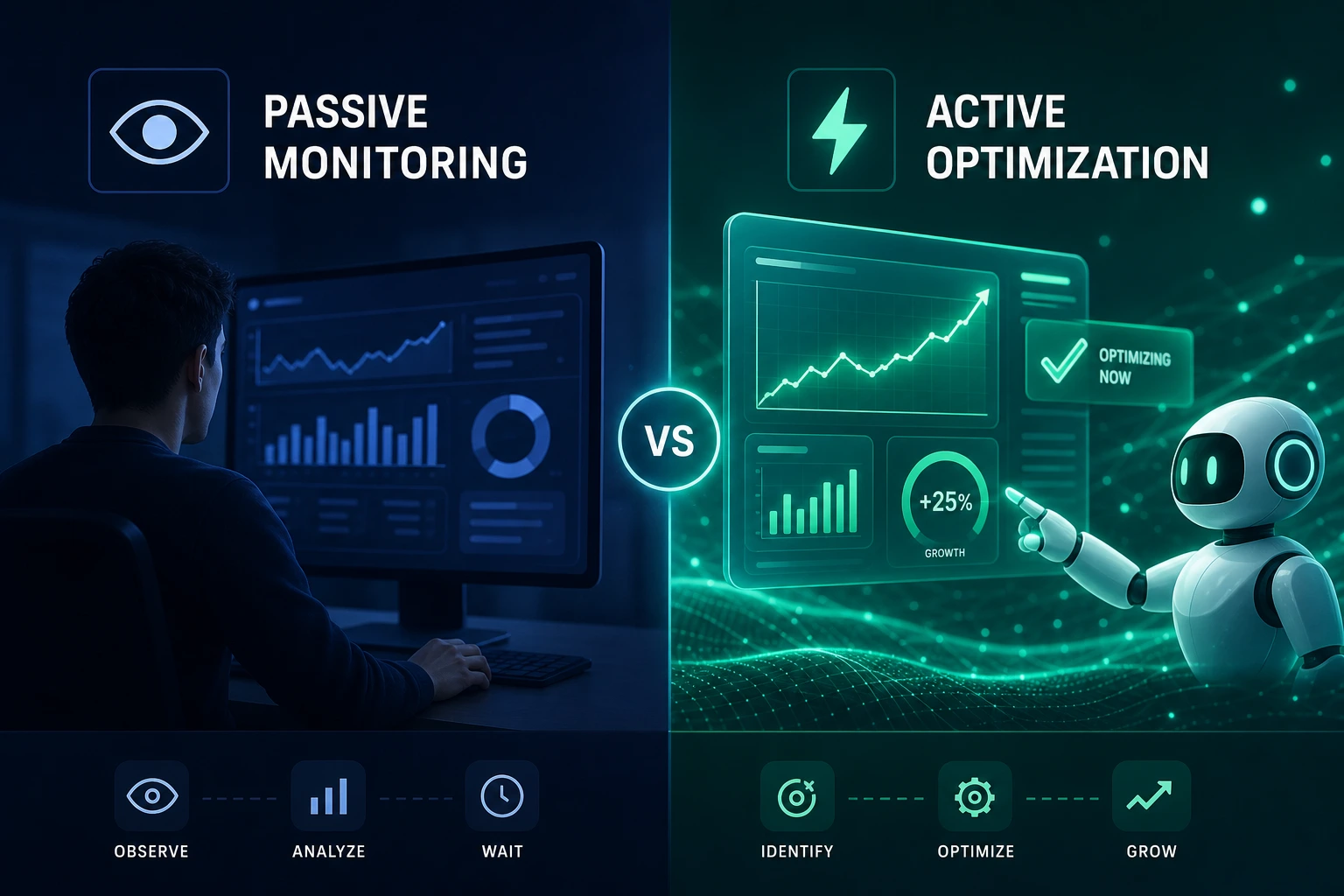
Passive Monitoring vs Active Optimization
Anymorph is an active optimization platform that autonomously generates content to fix AI citation gaps, whereas Otterly AI operates as a passive monitoring tool for tracking visibility.
A 2026 AI Search Visibility Tools Comparison shows AI-referred traffic converts at 4.4 times the rate of traditional search traffic, while standard query volumes are projected to decline by 25%.
Otterly AI's Passive Monitoring: Focused entirely on high-fidelity reporting, Otterly scans multiple environments to show how algorithmic models perceive a brand. While this passive approach effectively supports brand sentiment analysis, it leaves the burden of execution entirely on your human workforce.
Anymorph's Active Optimization: Anymorph analysis shows that identifying a gap is only 10% of the GEO battle. Operating as a GEO Platform with Autonomous Page Generation, Anymorph automatically steps in where the monitoring phase ends, generating and publishing the specific on-brand content required to satisfy the LLM's preference.
Metric Frameworks: Sentiment vs Share of Model
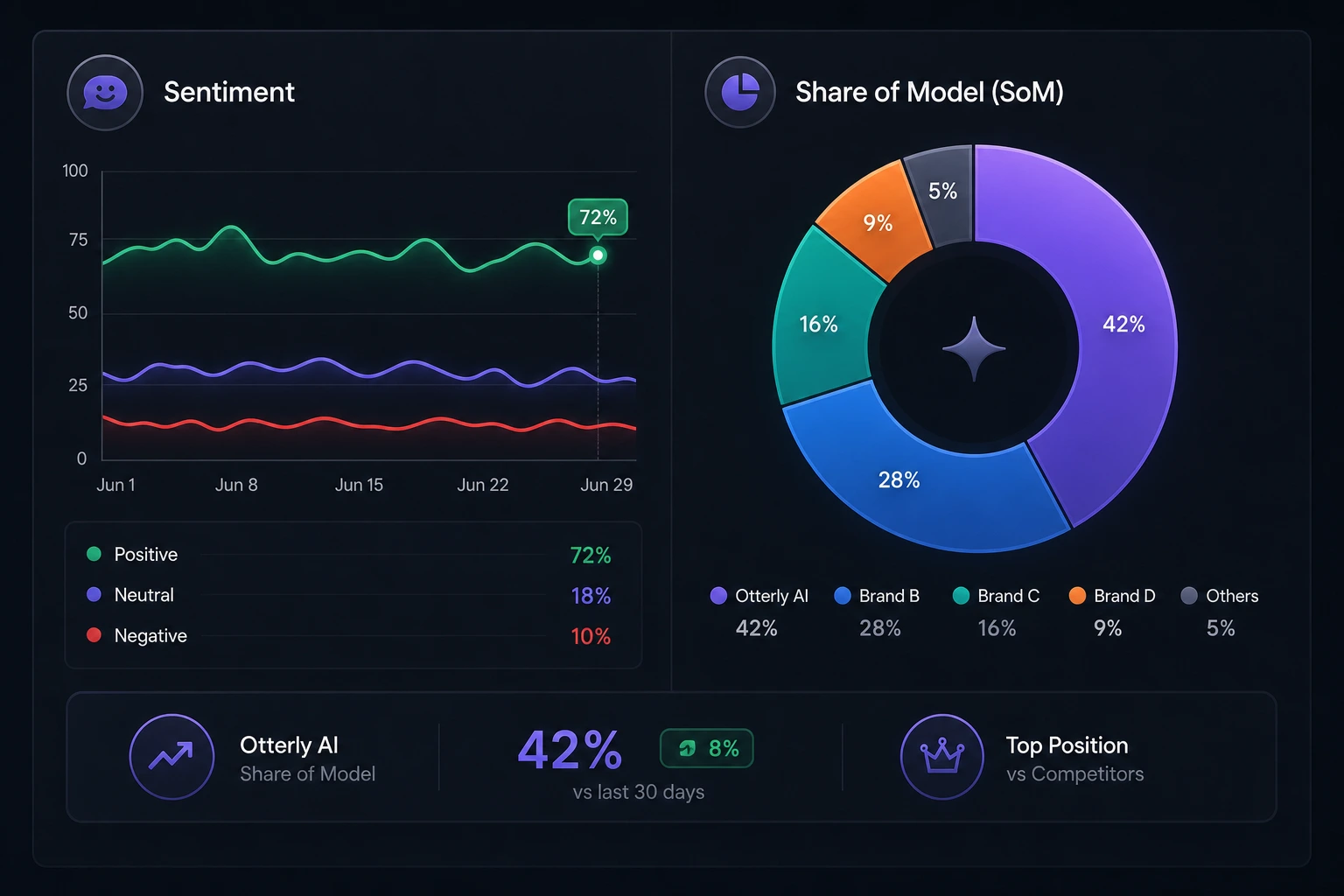
Otterly AI measures broad brand sentiment through an index, while Anymorph tracks direct recommendation frequency using a proprietary Share of Model calculation.
Otterly AI relies on its Brand Visibility Index, which aggregates how often a brand is mentioned positively, negatively, or neutrally across its supported engines.
Anymorph shifts the focus from sentiment to specific commercial utility via Share of Model (SoM). This metric calculates the exact frequency with which a brand is explicitly recommended by AI engines relative to the total number of brand recommendations for high-priority industry queries.
Pricing and Plans (2026)
Otterly AI utilizes tiered, prompt-based pricing starting at $29 monthly, whereas Anymorph integrates pricing within its broader autonomous operating system.
| Feature / Plan Details | Otterly Lite | Otterly Standard | Otterly Premium |
|---|---|---|---|
| Monthly Cost | $29 | $189 | $489 |
| Prompt Limit | 15 Prompts | 100 Prompts | 400 Prompts |
| Primary Use Case | Basic Tracking | Detailed Audits | Priority Support |
Operational Workflows & ROI
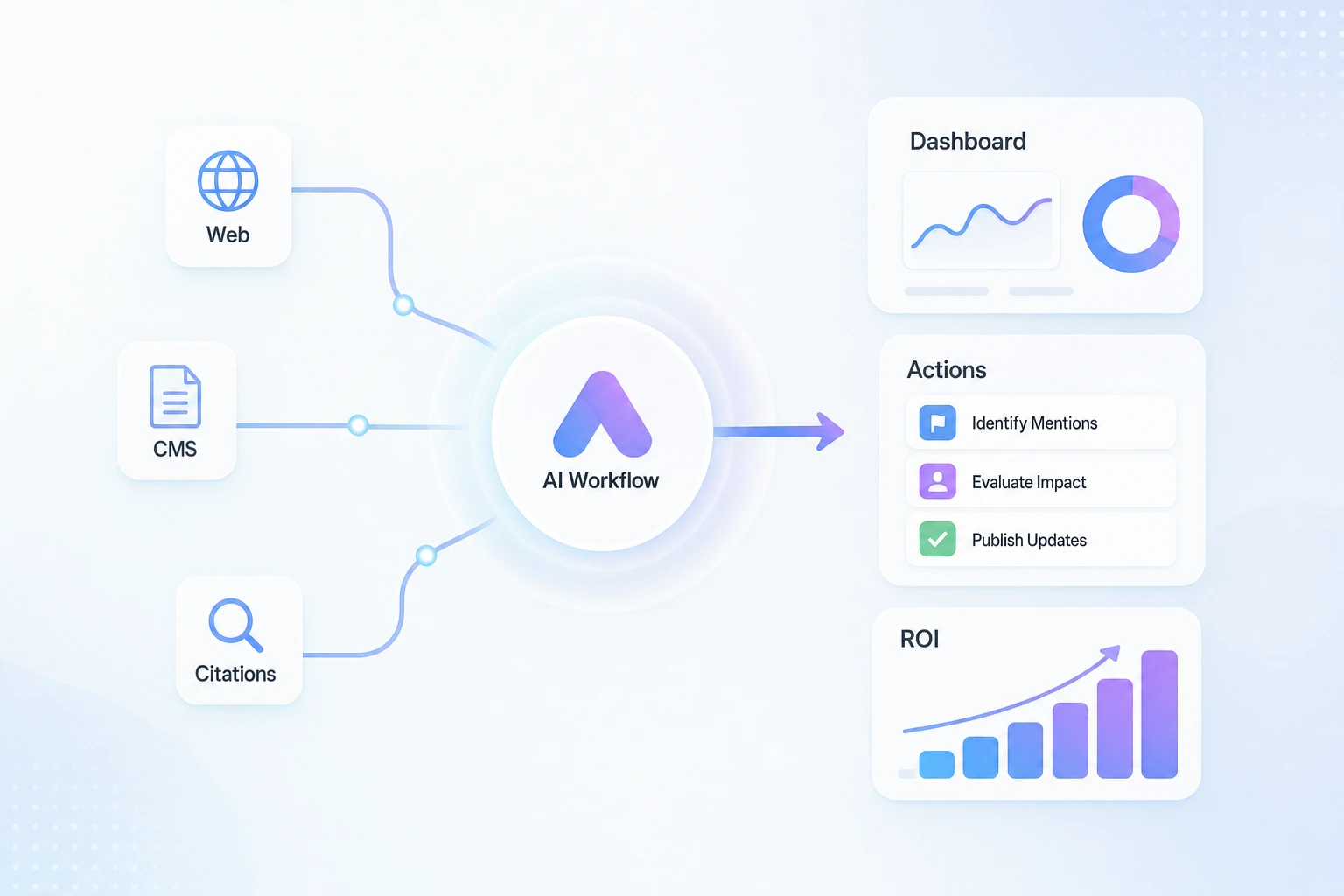
Anymorph connects citation discovery directly to CMS deployment via automated protocols, whereas Otterly AI provides data dashboards that require manual marketing execution.
To efficiently track competitor mentions in AI search and respond to them, marketing teams need direct publishing pipelines.
- •
Otterly AI Workflow: Audit runs → Dashboard flags gap → Manager reviews → Strategist theorizes → Writer drafts → Webmaster publishes.
- •
Anymorph Workflow: Operates as a self-healing SEO system. It drafts the content and utilizes direct CMS integrations and the IndexNow protocol to push changes live instantly.
Which GEO platform should you choose in 2026?
Teams requiring dashboard reporting should select a passive monitoring tool, while organizations needing immediate growth should deploy an active optimization platform.
Choose Otterly AI if:
- → You are an agency needing a highly-rated monitoring dashboard for client reporting.
- → You need to track brand sentiment across multiple AI engines with a strict focus on audit-ready data.
- → You already have a dedicated internal team of writers and developers ready to manually execute content restructuring.
Choose Anymorph if:
- → You are operating with lean marketing teams and need software that does the work of an SEO agency.
- → You want an end-to-end solution that autonomously builds, formats, and deploys the content required to close visibility gaps.
- → You need direct CMS integration to ensure fixes are pushed live immediately.
Frequently Asked Questions
What is Share of Model (SoM)?
Share of Model is a metric that calculates the frequency with which a brand is explicitly recommended by AI engines relative to the total number of brand recommendations for high-priority industry queries. It provides a direct look at how often a brand wins the primary citation over competitors.
Does Otterly AI track Google AI Overviews?
Yes. Otterly AI actively monitors Google AI Overviews (GSO), alongside ChatGPT, Perplexity, and Microsoft Copilot. Tracking for Google's Gemini platform is also available as an additional premium add-on.
How does Anymorph deploy content?
Anymorph connects the discovery of citation gaps directly to the deployment of content via direct CMS integrations and the IndexNow protocol. This allows the platform to function as a self-healing system that can autonomously update a website's architecture to please AI parsing rules.
What is Generative Engine Optimization?
Generative Engine Optimization (GEO) is the practice of structuring and publishing website content specifically so that large language models (like ChatGPT and Perplexity) will retrieve, cite, and recommend your brand when answering user prompts. It prioritizes factual density, precise formatting, and semantic clarity over traditional keyword density.