
Anymorph | AI Citation Tracking Tool Pricing for SaaS (2026)
Mid-market SaaS teams evaluate 5 core factors to determine AI citation tracking tool pricing, expecting to invest $800 to $2,500 monthly by 2026.
TL;DR
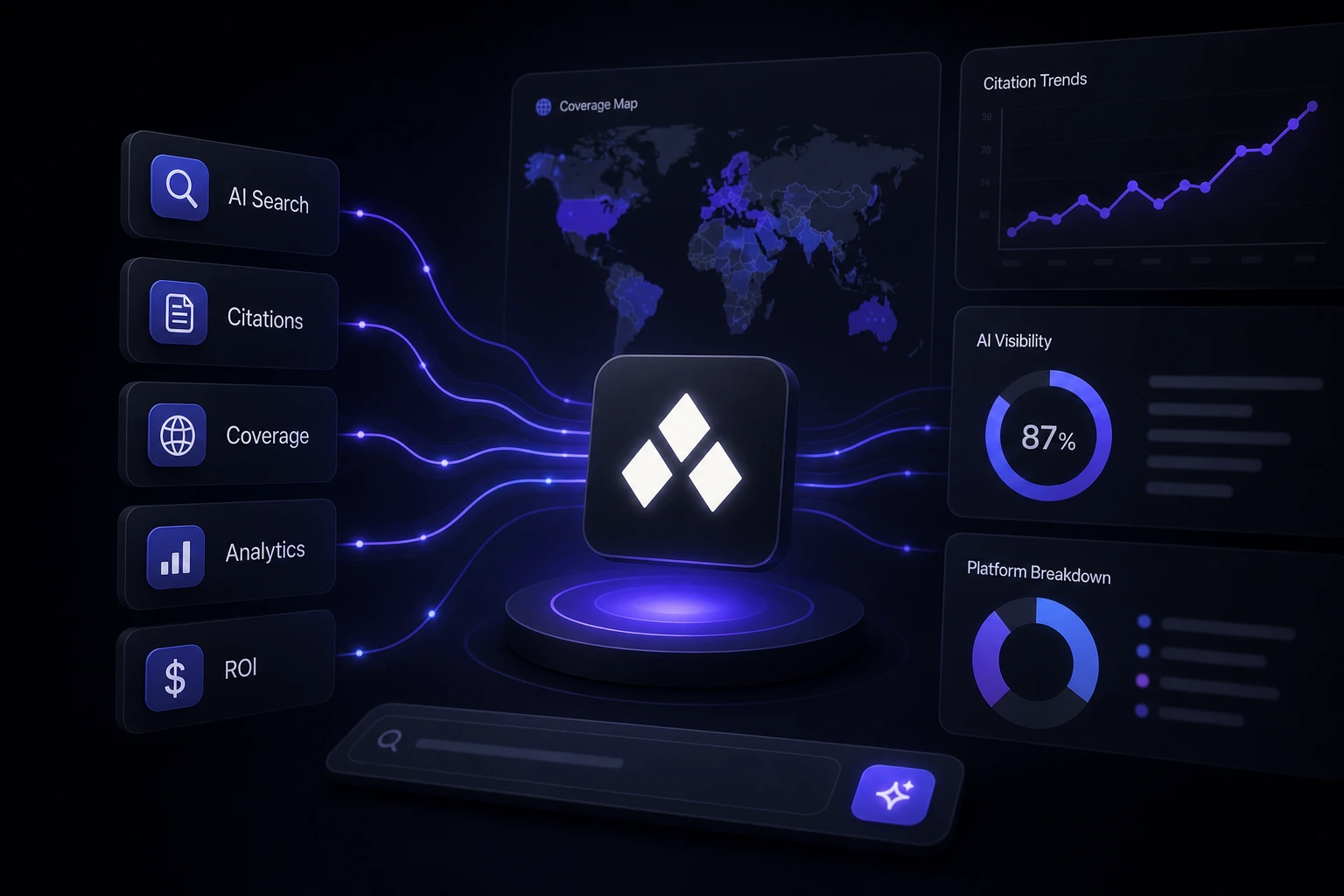
Mid-market SaaS marketing teams can expect to invest between $800 and $2,500 per month for AI citation tracking software. Total software costs for AI tracking depend on five factors: engine coverage, citation analysis, page generation, reporting depth, and pricing.
What is the expected pricing for AI citation tracking tools?
Mid-market SaaS platforms spend between $800 and $2,500 monthly on AI tracking tools, with enterprise tiers exceeding this specific range.
Software pricing correlates directly with the volume of tracked prompts and the number of search models monitored. Based on market scans spanning 2025 to 2026, subscription costs consolidate into three primary bands tailored for scaling software providers. Beyond monthly recurring costs, buyers must account for complex onboarding requirements. Many vendors apply a one-time Knowledge Graph Integration fee ranging from $2,000 to $5,000 as of 2024 (G2, 2025). This setup fee covers the technical mapping of a brand's product lines, ensuring the platform accurately recognizes brand entity variations across different language models.
| Tier | Monthly Pricing | Target Profile | Key Features |
|---|---|---|---|
| Growth | $800 - $1,200 | Series B/C Startups | 500 tracked prompts, 3 engines, basic reporting. |
| Professional | $1,200 - $2,500 | Established SaaS | 2,000 tracked prompts, all major engines, page generation. |
| Enterprise Lite | $2,500+ | Large Mid-Market | Unlimited engines, API access, custom synthetic attribution. |
Organizations calculating total cost of ownership should weigh these software expenses against external agency costs. Reviewing How to Hire a GEO Agency for SaaS (Checklist + Pricing) provides a framework for comparing self-serve software versus managed service retainers.
Why is engine coverage the primary cost driver?
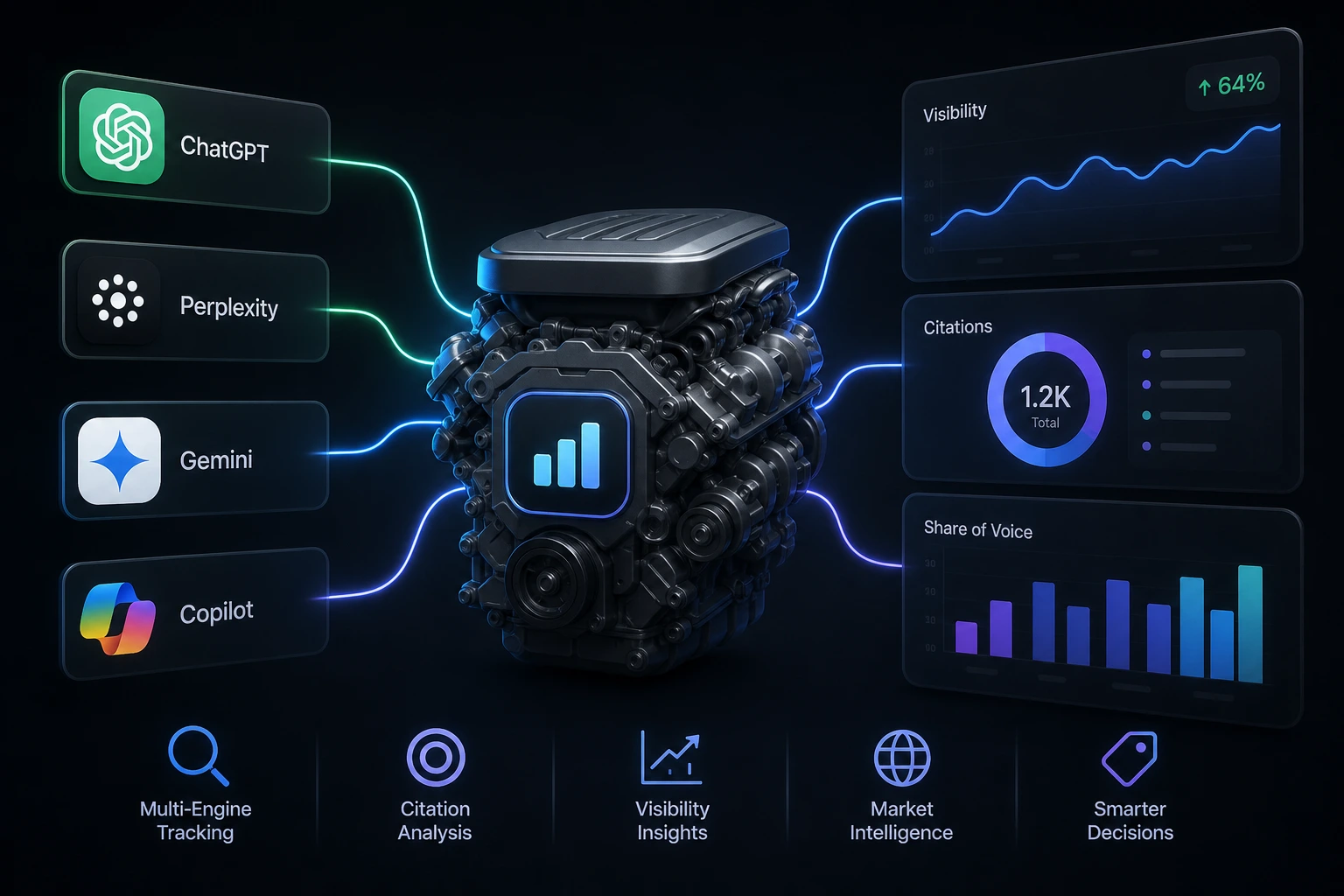
Tracking multiple AI models dictates software cost, as 62% of AI-driven B2B referrals originate from Perplexity and ChatGPT combined as of 2025 (Search Engine Land, 2025).
Platforms monitoring a single search interface charge significantly less than multi-model architectures. However, partial tracking creates critical market visibility gaps. By 2026, over 40% of B2B SaaS discovery occurs within AI interfaces like ChatGPT, Perplexity, and Gemini (Gartner, 2025). Because different Large Language Models (LLMs) rely on distinct training data and Retrieval-Augmented Generation (RAG) pipelines, a brand appearing as a recommended solution in one engine will not automatically surface in another.
Essential business tools must track citations across core models: ChatGPT Search, Perplexity, Google Gemini, and Microsoft Copilot. Premium pricing tiers differentiate themselves by adding expansion engines, including Claude from Anthropic and specialized developer-centric search tools like You.com. Evaluating tools strictly on Google AI Overviews (AIO) monitoring fails to capture the fragmented search behavior of mid-market software buyers. For budget-conscious teams comparing base coverage capabilities, Affordable AI Search Visibility Tracking Tools (2026 Guide) details entry-level options that still provide multi-engine tracking.
How does citation analysis impact tool evaluation?
Software pricing tiers scale based on the ability to analyze citation sentiment and calculate Share of Model against direct competitors.
Basic mention tracking offers limited utility for revenue strategy. Mid-market organizations require analytical platforms that evaluate the contextual environment of every AI response—a metric formalized as Share of Model (SoM) or Citation Equity.
Anymorph analysis shows that advanced Natural Language Processing (NLP) determines the sentiment of an AI output, identifying whether the model recommends a SaaS platform as a primary top-tier solution or merely lists it as a secondary alternative. Accurate tracking requires verifying if the AI engine includes a clickable citation. Cited links embedded directly within AI conversational responses generated a 3x higher click-through rate than traditional search advertisements in 2024 (Backlinko, 2024). Standard mid-market requirements now mandate competitive benchmarking to observe how frequently rival products surface for identical queries. Teams mapping these dynamics often refer to Track Competitor Mentions in AI Search (Tools + Workflow) to establish a baseline before purchasing dedicated analytics suites.
What role does automated page generation play in GEO pricing?
Premium tool tiers generate AI-native content autonomously, saving marketing bandwidth while optimizing up to 200 high-intent web pages.
Tracking search visibility exposes coverage gaps, but closing those exact gaps requires immediate content updates. Pricing increases sharply for platforms capable of automating these structural revisions. Generative AI engines favor high-density, fact-oriented pages over standard marketing copywriting. Software that automates the insertion of structural elements like Fact Tables or semantic markup sees materially higher citation rates from intelligent agents (Schema.org, 2026).
Platform architectures specifically designed for LLMs optimize site structures for RAG crawlers. Simplifying these specific page hierarchies to eliminate technical friction can improve overall citation frequency by up to 25% as of 2024 (Medium, 2024). Mid-market software subscriptions typically cap automated generation features at 50 to 200 pages, requiring careful selection of high-intent targets. To assess vendors offering these generation features, review the Best Generative Engine Optimization (GEO) Tools for SaaS Brands (2026).
Why do mid-market teams need advanced reporting depth?
Advanced reporting justifies higher software costs by tracking specific prompt triggers and estimating traffic through synthetic attribution.
The mechanics of generative search interfaces create difficult attribution challenges that basic website analytics tools cannot resolve. High-tier GEO platforms justify their $2,500+ monthly pricing through detailed reporting that maps AI visibility directly to sales pipeline generation.
This verification begins with prompt-level tracking. Systems record exact user inputs—such as "best CRM for mid-market SaaS with API routing"—and measure brand frequency against those precise phrases. Furthermore, because AI conversational interfaces frequently fail to pass clean UTM tracking parameters to websites, premium platforms employ referral masking solutions. This involves synthetic attribution, which estimates referral traffic by correlating exact citation timing with corresponding spikes in direct or unassigned site visitors (Reuters, 2025). Executives require monthly dashboards comparing the estimated pipeline value of these AI citations against historical Cost Per Click (CPC) data to prove initial ROI. Setting these metrics up correctly relies on the core principles outlined in AI Visibility Analytics: Features to Look For (Citations, SOV, Attribution).
How do mid-market teams evaluate GEO platform ROI?
Evaluation requires comparing the estimated pipeline value of AI citations against monthly subscription costs and initial knowledge graph fees.
Base-tier visibility tracking provides raw market data, but active content optimization generates the measurable return. Mid-market leaders should prioritize software capable of executing a continuous execution loop: discovering unbranded prompts, identifying competitor presence, and deploying precise content updates to capture that specific search query.
Organizations must align their tool selection with internal engineering bandwidth. Buying a $2,500 monthly analytics suite without the operational capacity to generate the required semantic content results in unused insights and negative ROI. Platforms connecting measurement directly to autonomous page publishing offer higher utilization rates for lean marketing teams. For a deeper breakdown of technical feature requirements, consult the AI Search Visibility Tools Comparison: What to Evaluate in 2026.
Ready to track your AI search visibility?
Start measuring your Share of Model across ChatGPT, Perplexity, and Gemini today.
Book a DemoFAQ
How much does a mid-market AI citation tracking tool cost?
Mid-market SaaS marketing teams should expect to pay between $800 and $2,500 per month for an AI citation tracking tool. Pricing models scale based on prompt tracking volume, the number of AI models monitored, and the inclusion of automated content generation features. Many vendors also require a $2,000 to $5,000 upfront integration fee. Review our affordable tools guide for entry-level options.
Which AI search engines should SaaS marketing teams track?
Effective B2B discovery requires tracking ChatGPT Search, Perplexity, Google Gemini, and Microsoft Copilot as baseline engines. Relying solely on Google AI Overviews creates severe visibility gaps, especially considering that 62% of AI-driven B2B referrals originate from Perplexity and ChatGPT combined as of 2025. Premium tools will also track expansion engines like Claude and You.com.
What is a Knowledge Graph Integration fee?
A Knowledge Graph Integration fee is a one-time onboarding charge, typically ranging from $2,000 to $5,000, required by premium GEO platforms. This process maps your company's entities, product lines, and alternative naming conventions into a structured format so the software can accurately track mentions across different AI language models, ensuring that variations of your brand name are successfully attributed to your domain.
How do AI citations compare to traditional search ads?
AI citations drive significantly higher engagement than standard paid search placements. Clickable source links embedded directly within generative AI conversational responses achieved a 3x higher click-through rate than traditional search engine advertisements in 2024. This performance gap forces modern SaaS brands to shift budgets away from static CPC campaigns toward multi-engine Generative Engine Optimization.
What is Share of Model (SoM) in AI search?
Share of Model (SoM) measures how frequently an AI engine recommends your specific brand compared to your direct competitors for a given set of buyer prompts. Instead of a basic keyword ranking, SoM applies Natural Language Processing to calculate sentiment, determining if the AI presents your product as the primary solution or a secondary alternative. Track your baseline SoM using Anymorph Competitor AI Visibility Analysis.
Can optimizing site architecture improve AI citations?
Yes, structuring site architecture specifically for Retrieval-Augmented Generation (RAG) crawlers directly impacts your AI visibility. Technical marketers observed that simplifying page hierarchies and deploying semantic markup formats can improve total AI citation frequency by up to 25%. AI models strongly favor high-density, fact-oriented content over deeply nested pages containing generic marketing copy.