
Affordable AI Search Visibility Tracking Tools
Stop guessing and start winning in AI Search Overviews. Traditional SEO tools aren't enough when Google AI Overviews push organic results down an average of 1,686 pixels.
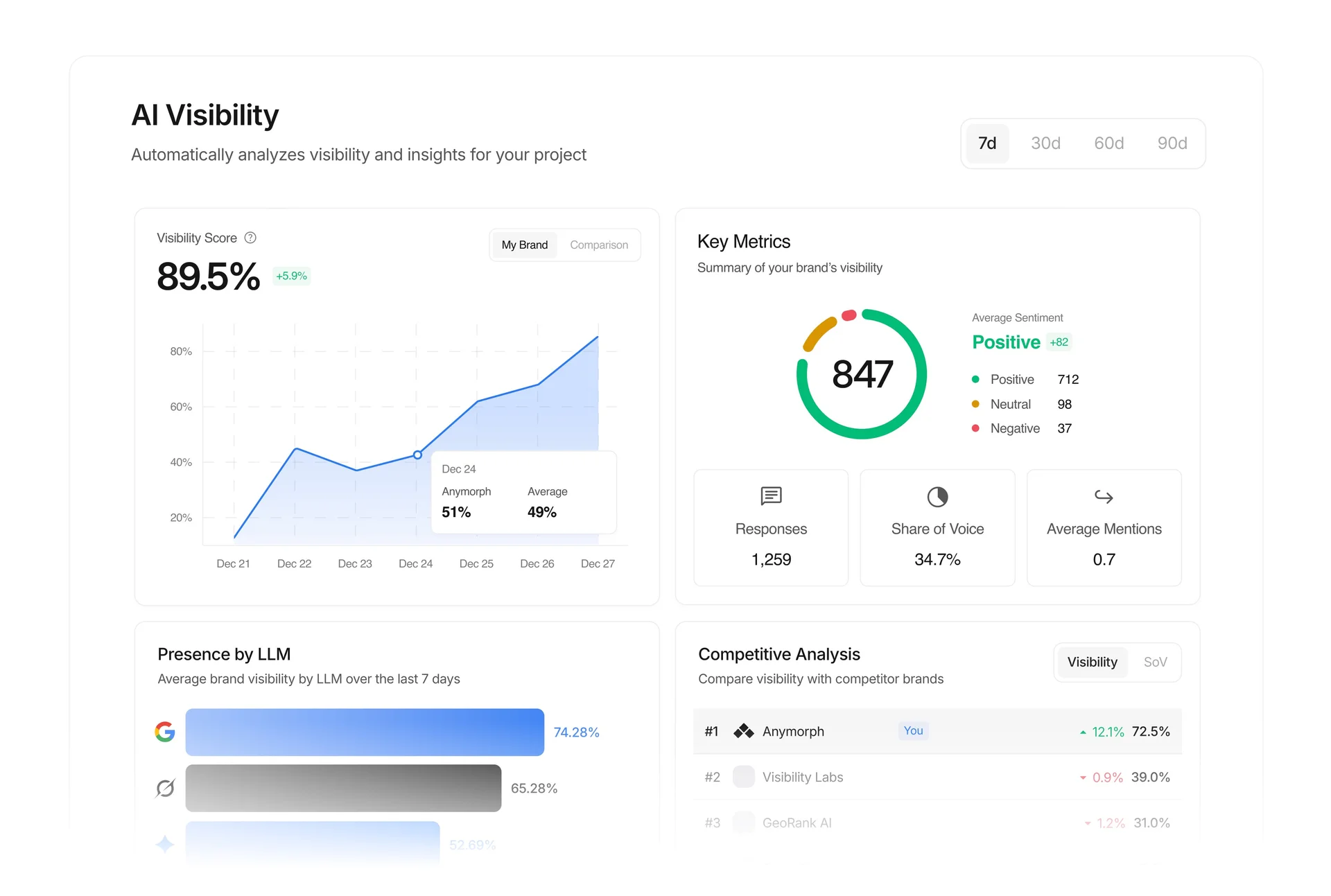
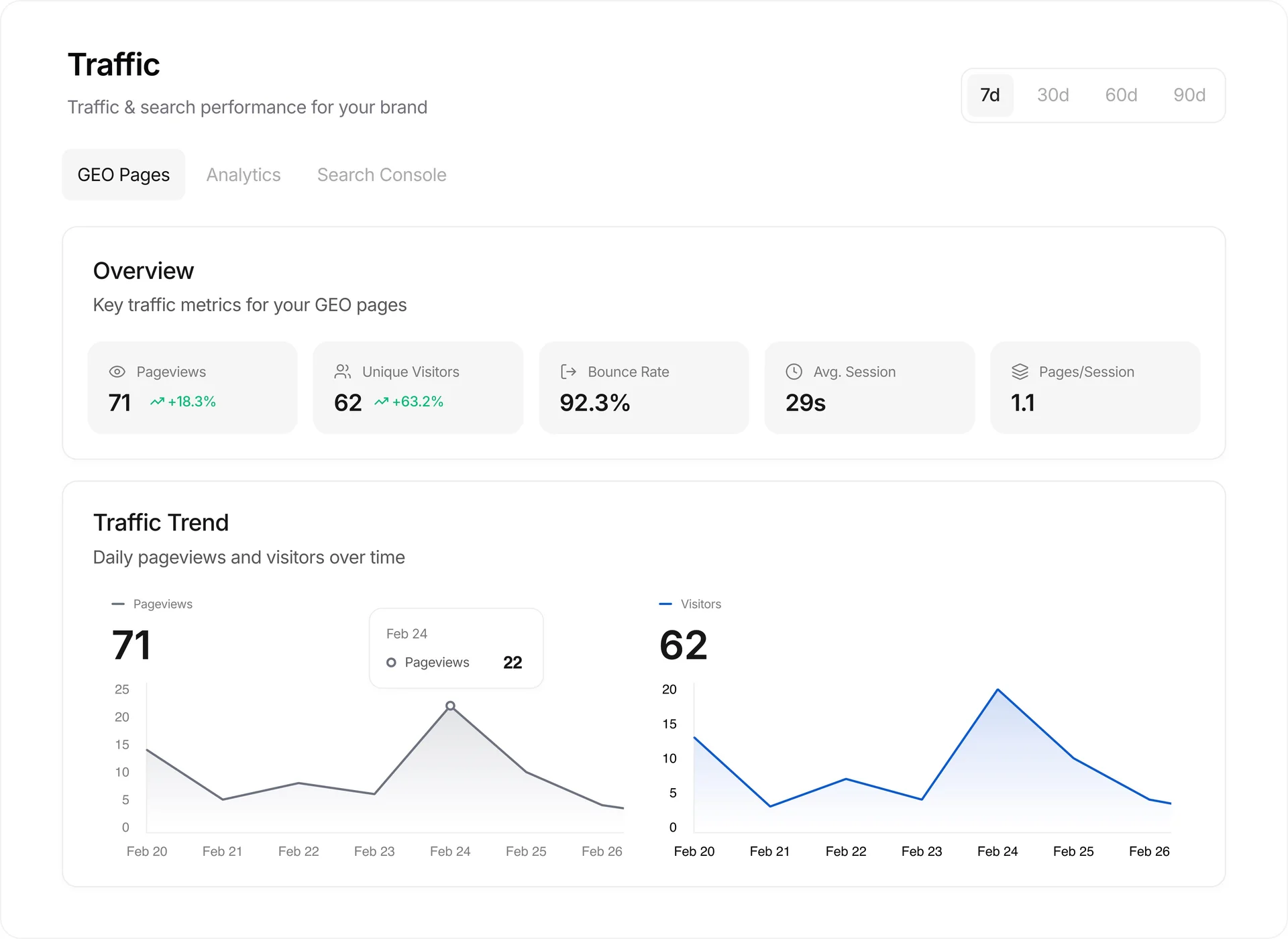
AI-generated traffic trends and visitor analytics
Why is traditional rank tracking failing in 2026?
Classic SEO metrics are becoming obsolete as Gartner predicts a 25% drop in traditional search volume by the end of this year. If your brand isn't being cited by AI assistants, you are invisible to the highest-converting users.
Research shows that AI-generated traffic now converts 4.4x faster than traditional organic clicks, meaning a single missed citation could cost you four times more than a lost keyword rank.
- Track citations across 10+ AI engines
- Monitor sentiment and brand mentions in real-time
- Capture evidence logs and AI response screenshots
- Identify content gaps to reclaim your organic traffic
What are the best affordable AI search visibility tools?
You don't need a $1,500 monthly budget to track your AI performance. Several reliable platforms offer professional-grade Generative Engine Optimization (GEO) tracking for under $100/mo.
Rankscale AI
$20/moThe best credit-based option for startups needing flexible, low-cost monitoring for ChatGPT and Gemini.
Geoptie
$49/moA robust all-in-one suite that includes a GEO Audit and rank tracker with a 14-day free trial.
Otterly.AI
$25/moIdeal for tracking how your brand appears in conversational prompts and identifying specific E-E-A-T signals.
Peec AI
~$104/moThe premier choice for agencies, offering unlimited seats and tracking across Perplexity and Google AIO.
How do you choose the right monitoring tool for your workflow?
Selecting an affordable tool requires focusing on data accuracy and actionability rather than just price. Because only 9.2% of URLs remain consistent across repeat AI queries, your tool must provide more than a simple snapshot.
Citation Frequency Tracking
Ensure the tool measures how often you are linked relative to your top 3 competitors.
Sentiment Analysis
Confirm whether the tool can distinguish between a positive product recommendation and a negative brand mention.
Evidence Logs
Prioritize platforms like Geoptie or SE Visible that provide screenshots of the actual AI response for verification.
Freshness Monitoring
Since 53% of ChatGPT citations come from content updated in the last 6 months, look for tools that flag 'content decay'.
Transform your AI visibility today
Don't let AI assistants ignore your brand. Start monitoring your citations and outpace competitors in the generative search race.
Frequently Asked Questions
What is the difference between SEO and GEO tracking?
While SEO tracks keyword rankings on search engine result pages, GEO (Generative Engine Optimization) tracking measures how often and in what context your brand is cited as a source in AI-generated answers from LLMs like ChatGPT and Perplexity.
Why is content freshness important for AI citations?
AI models prioritize recent data to remain relevant. Data shows that 53% of ChatGPT citations are sourced from content updated within the last 6 months, making frequent updates a key factor for visibility.
Can I track AI search visibility for free?
Yes, tools like HubSpot offer free one-time assessments, and platforms like Geoptie or Otterly.AI provide 14-day free trials or free lite tiers for basic citation reporting.