
How to Monitor Google AI Overviews Brand Mentions
Traditional SEO tools have a blind spot. Here is exactly how to detect when Google's AI cites your brand, and how to engineer your content to be the preferred source.
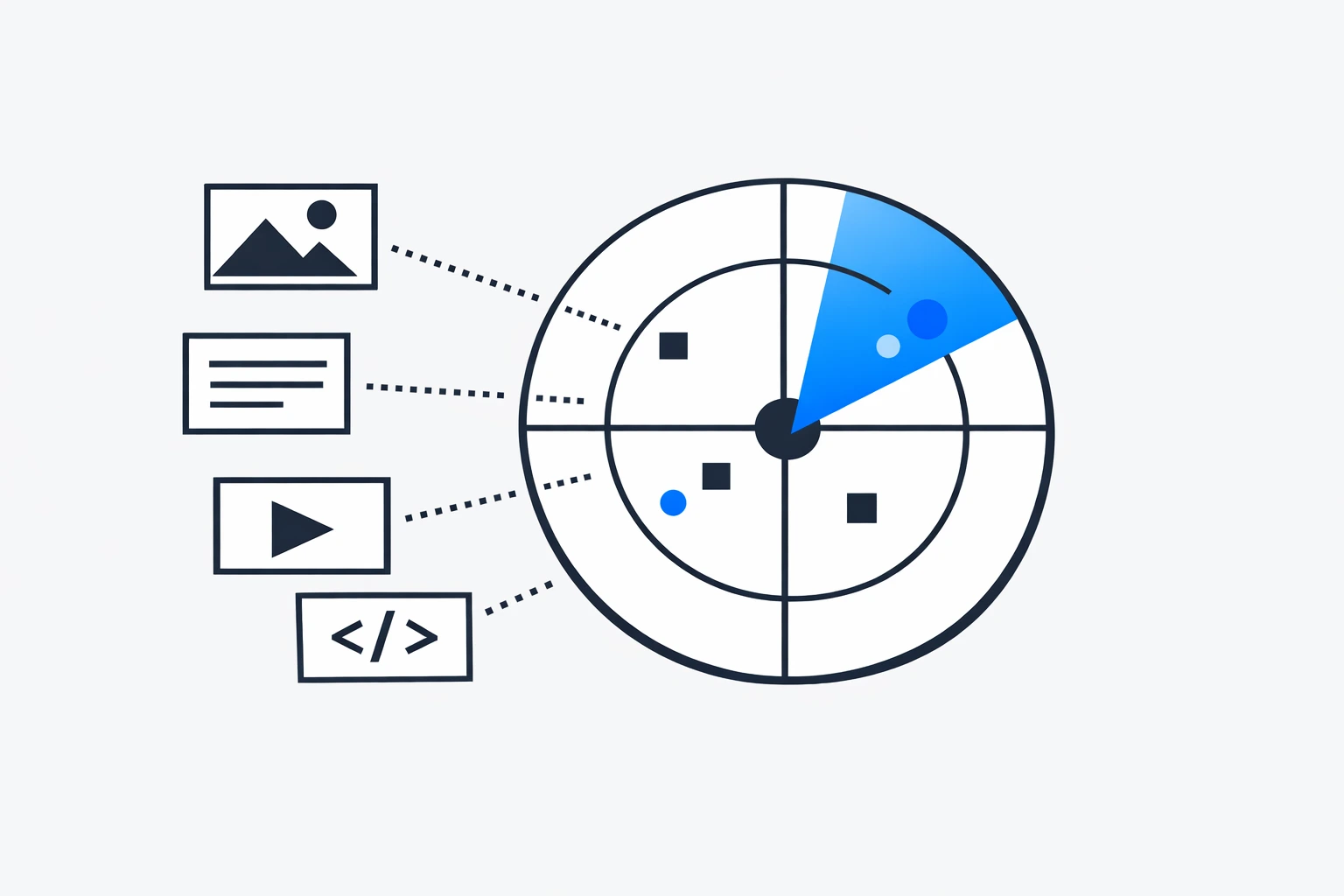
The "Zero-Click" Reality of 2026
As of mid-2025, Google AI Overviews appear in over 50% of all search queries. While this has reduced traditional organic click-through rates, the traffic that remains is 4.4x more likely to convert. The game has changed from "ranking" to "being cited."
Of long-tail keywords (8+ words) now trigger an AI Overview, dominating the top of the funnel.
Only 15% of AI citations come from the top 10 organic results. Ranking #1 no longer guarantees visibility.
Visitors arriving via AI citations are significantly more qualified than traditional search traffic.
The Detection Gap
Google Search Console does not yet provide a dedicated filter for AI Overview impressions. This creates a "blind spot" for marketing teams relying solely on first-party data.
Manual Tracking Framework
For smaller teams, maintain a weekly log tracking:
- 1 Prompt: The specific query triggering the AIO.
- 2 Citation: Does your brand appear in the text?
- 3 Link Status: Is there a clickable source card?
Automated Monitoring Solutions
Anymorph
Crawls your domain to identify visibility gaps and auto-injects data points to increase citation rates by up to 40%.
Surfer AI Tracker
Offers daily updates on brand mentions in AIO and ChatGPT, focusing on share-of-voice metrics.
Ahrefs Brand Radar
Tracks brand presence across multiple LLM platforms including Perplexity and Gemini.
SerpApi
Technical solution for engineering teams building custom dashboards to retrieve AIO signals via API.
How to Become "Citable"
To be cited, content must be machine-readable. Anymorph's data suggests that structured, data-heavy pages are significantly more likely to be picked up by Gemini-powered summaries.
The 70-Word TL;DR
Start articles with a concise 50–70 word summary. AI models prioritize these "answer blocks" for direct citations.
Structured Data Injection
Use FAQPage, HowTo, and Organization schema. Ensure zero critical errors in Rich Results Test.
Data Density
Include concrete statistics and first-party metrics. AI models prefer content that provides factual grounding.
Stop Guessing Your AI Visibility
Don't let the "blind spot" hide your brand's performance. Start monitoring your AI Overview citations and optimize your content for the new era of search.